Global buyers entering 2026 face a wider Commercial Machine market than ever before. CNC machining centers, industrial robots, packaging systems, commercial kitchen equipment, laundry machines, and material-handling units now compete for investment. Each type serves a different workflow, labor model, and maintenance reality. No single machine fits every factory, warehouse, hotel, or food-service operation.
The International Federation of Robotics reported 542,076 industrial robots installed worldwide in 2024. That figure shows continuing demand for automation, even when purchasing budgets remain cautious. Deloitte’s 2025 Smart Manufacturing and Operations Survey found that 92% of surveyed leaders viewed smart manufacturing as a major competitiveness driver within three years. The signal is clear. Buyers want productivity, but they also need dependable service, operator training, energy control, and cybersecurity safeguards.
H. James Harrington, a respected quality-management expert, said, “Measurement is the first step that leads to control and eventually to improvement.” His point remains practical for every Commercial Machine purchase. Buyers should measure cycle time, power consumption, uptime, spare-part access, and total ownership cost before comparing specifications. A polished brochure cannot reveal a weak service network. That is where many buying decisions become imperfect.
This guide examines the leading Commercial Machine types for global buyers in 2026. It considers capacity, automation level, safety features, regional support, and return on investment. Some priorities may conflict. Lower price can mean higher maintenance exposure. Advanced software can also create new training demands. Careful evaluation still matters most.
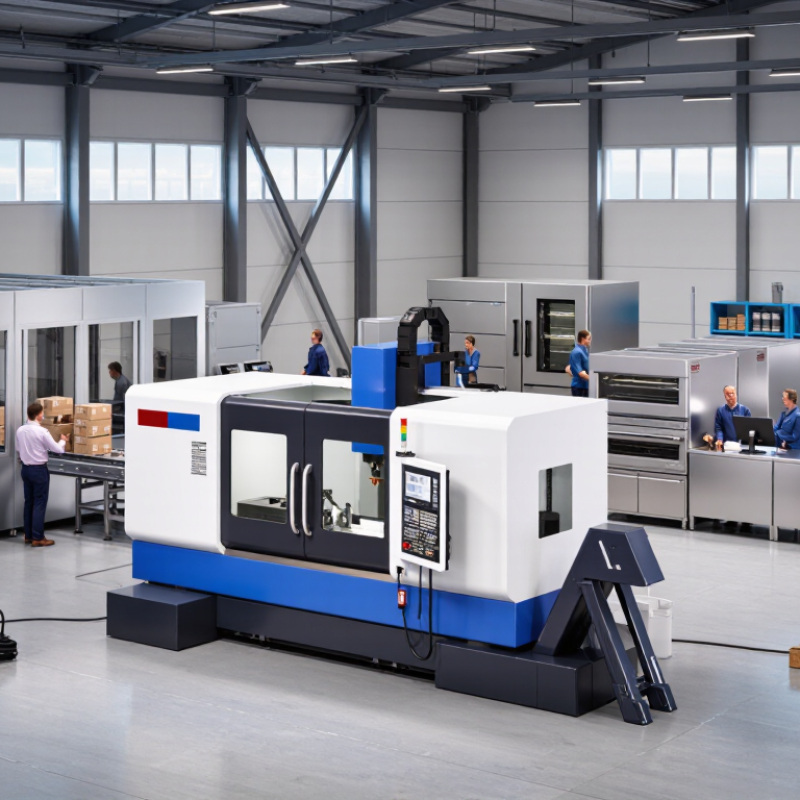
2026 Top Commercial Machine Types for Global Buyers
Industrial robots remain a leading commercial machine category for global buyers. The International Federation of Robotics reported 541,302 industrial robot installations worldwide in 2023. This represented a 2% year-on-year increase, despite weaker investment conditions in several manufacturing markets. The same report recorded about 4.28 million operational industrial robots globally. That installed base shows a mature, expanding production tool rather than a short-term trend.
The numbers matter on a factory floor. A six-axis robot may handle welding, palletizing, or machine tending beside a guarded cell. However, buyers should examine payload, reach, cycle time, accuracy, and maintenance access before comparing quotations. Installation speed can also affect production costs. A machine that needs weeks of integration may create more disruption than expected. Small details matter.
IFR also reported global robot density of 162 units per 10,000 manufacturing employees in 2023. This indicator helps buyers compare automation intensity, but it does not measure operating quality. A high density may still hide poor programming, limited technician training, or idle equipment. That is an uncomfortable point. Purchase decisions should include workforce skills, spare-part availability, safety compliance, and measurable payback assumptions. Reported installations are useful evidence, not a guarantee of commercial success.
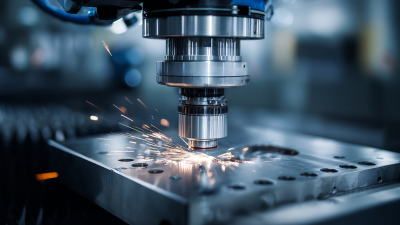
For global buyers, axis count is not a simple upgrade ladder. A CNC machine’s useful output depends on part geometry, tolerances, tooling, and operator skill. Three-axis machines move X, Y, and Z. They suit flat plates, pockets, and many prismatic parts. Setup changes can add time and alignment error. In a production shop, that hidden cost matters.
Four-axis equipment adds rotary movement, often around X, Y, or Z, depending on its design. It can machine several faces with fewer re-clampings. This improves consistency on indexed parts and reduces fixture labor. However, continuous rotary cutting is not always available. Buyers should verify the controller, work envelope, spindle clearance, and positioning accuracy. Ask for test-cut results, not only brochure figures. Small errors become visible around drilled bolt circles.
Five-axis machines tilt and rotate the workpiece or tool, reaching complex surfaces with fewer setups. They suit molds, impellers, medical components, and aerospace-style structures. Better access can improve surface finish and shorten cycle time. Yet five-axis programming is harder, and collision checking becomes essential. Skilled verification is required. A less experienced team may achieve worse output than with a reliable four-axis process. Axis count alone can mislead. Check thermal growth, probing, maintenance response, training, calibration, rigidity, and shop temperature. Not every complex part needs five axes.
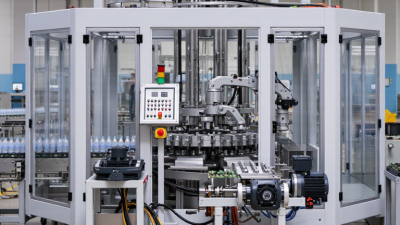
Packaging machinery buyers should compare OEE, not only advertised line speed.
OEE equals availability, performance, and quality.
The OEE Foundation commonly identifies 85% as a world-class benchmark, while many plants operate near 60%. That gap matters.
Consider a 100 PPM line. At
90% availability,
85% performance,
and
98% quality,
effective output reaches about 75 PPM. A 120 PPM machine may deliver only 90 PPM under similar conditions. Speed alone misleads.
Changeovers, film breaks, minor stops, and rejected packs quietly consume capacity. PMMI’s 2024 State of the Industry reporting also highlights labor pressure and automation investment as key packaging priorities. Buyers should request trial data using their actual materials, formats, and operators. Ask for sustained output, not a short demonstration.
For a 60–120 PPM project, record hourly good packs, downtime minutes, changeover duration, and reject causes. Energy use and maintenance response deserve attention too.
A fast machine with fragile sealing components can become expensive between shifts. I would treat supplier projections as assumptions until production trials confirm them.
The 85% benchmark is useful, not sacred. Product variability may make 70% more realistic, while poor maintenance can push performance far lower.
Measure the loss.
2026 Top Commercial Machine Types for Global Buyers
Additive manufacturing is best compared through the seven ASTM process families. Each family shapes machine cost, production speed, material choice, and post-processing requirements. Vat photopolymerization cures liquid resin with light, producing smooth parts and fine details. Powder bed fusion selectively fuses polymer or metal powder in controlled layers. Material extrusion deposits softened filament or pellets through a heated nozzle. These systems are practical for prototypes, fixtures, and lower-volume production.
Material jetting places droplets of build material with high positioning accuracy. Binder jetting deposits liquid binder onto powder, then usually requires curing or sintering. Directed energy deposition feeds wire or powder into an energy source, often for repairs or large components. Sheet lamination bonds thin sheets, reducing some thermal distortion but adding cutting and bonding steps. Real factory evaluations show that the “best” process depends on geometry, tolerance, batch size, and operator skill. That sounds obvious, yet buyers often underestimate finishing labor.
Tips: Request sample parts using your actual material and geometry. Measure surface quality after finishing, not directly after printing. Check powder handling, ventilation, software compatibility, training, spare parts, and regional service access. Ask for documented ASTM terminology and repeatability data. A fast machine can still be expensive when setup is slow. I would also leave room for uncertainty; supplier test results may not reflect your factory conditions.
| ASTM Process Family | Commercial Machine Type | Material or Feedstock | Process Principle | Typical Layer Thickness | Typical Production Strength | Common Industrial Applications | Main Buyer Considerations |
|---|---|---|---|---|---|---|---|
| Vat Photopolymerization | SLA, DLP, and LCD resin printers | Liquid photopolymer resins, including standard, engineering, castable, dental, and biocompatible grades | A light source selectively cures liquid resin layer by layer | Approximately 25–150 μm, depending on the technology and application | Very high surface quality and fine feature detail; production properties depend strongly on resin and post-curing | Dental models, hearing-aid shells, prototypes, casting patterns, visual models, and small end-use parts | Resin shelf life, ventilation, washing and curing equipment, support removal, and long-term material stability |
| Material Extrusion | Fused filament fabrication and fused deposition modeling machines | Thermoplastic filament or pellet materials such as PLA, ABS, PETG, nylon, polycarbonate, and high-performance polymers | A heated nozzle deposits and fuses material along programmed toolpaths | Approximately 50–500 μm; pellet systems may use larger deposition beads | Low operating cost, broad polymer selection, and scalable build volumes; strength is often anisotropic | Jigs and fixtures, functional prototypes, housings, tooling, educational parts, and low-volume polymer production | Nozzle and chamber temperature control, warping, layer adhesion, support strategy, and filament or pellet handling |
| Powder Bed Fusion | Laser powder bed fusion, electron beam powder bed fusion, and polymer powder bed fusion systems | Metal, polymer, or composite powders, depending on the machine configuration | Thermal energy selectively fuses or melts regions of a powder layer | Approximately 20–120 μm for many commercial systems | Complex geometries, internal channels, lattice structures, and high part density; powder recycling practices vary by material | Aerospace components, medical implants, production tooling, lightweight structures, polymer housings, and spare parts | Powder safety, inert-gas supply, thermal management, depowdering, post-processing, and qualification requirements |
| Binder Jetting | Powder-bed binder jetting systems | Metal, sand, ceramic, or other powder combined with a liquid binding agent | Printheads selectively deposit binder into a powder bed; parts typically require curing, depowdering, and sometimes sintering or infiltration | Approximately 50–200 μm | High throughput and efficient nesting of many parts; final density and dimensional change depend on post-processing | Metal components, sand casting molds and cores, ceramic parts, and production batches with complex geometry | Furnace capacity, shrinkage compensation, powder flowability, binder management, and post-processing workflow |
| Directed Energy Deposition | Laser, electron-beam, or arc-based metal deposition systems | Metal wire or powder, including steel, nickel alloys, titanium alloys, aluminum alloys, and cobalt-based alloys | Material is delivered into a focused energy source that melts and deposits it onto a substrate | Approximately 250 μm to several millimeters, depending on the deposition head and process | High deposition rates, large build envelopes, repair capability, and multi-material deposition potential; machining is commonly required | Repair of high-value metal parts, large structures, near-net-shape billets, cladding, and feature addition to existing components | Energy source selection, shielding gas, substrate preparation, heat management, deposition monitoring, and finish machining |
| Material Jetting | Multi-nozzle photopolymer or wax jetting systems | Jettable photopolymers, waxes, and support materials | Tiny droplets of build material and support material are deposited selectively and cured or solidified | Approximately 16–50 μm in many high-resolution systems | Excellent detail, smooth surfaces, color capability, and multi-material modeling; many photopolymers have limited heat or impact resistance | Design verification, medical and anatomical models, consumer-product visualization, casting patterns, and color prototypes | Material compatibility, support removal, cleaning, UV aging, operating cost, and controlled storage conditions |
| Sheet Lamination | Ultrasonic metal foil, laminated composite, and sheet-based cutting or bonding systems | Metal foils, polymer sheets, paper, fiber-reinforced laminates, or other bonded sheet materials | Sheets are bonded by heat, pressure, adhesive, or ultrasonic energy and shaped layer by layer | Approximately 25 μm to 1 mm or more, depending on sheet thickness | Fast layer formation, low material waste in selected processes, and the ability to combine dissimilar sheet materials | Metallic structures, embedded components, composite prototypes, visual models, educational parts, and laminated tooling | Bond strength, interlayer inspection, cutting accuracy, sheet supply, anisotropy, and compatibility with embedded components |
| Buyer note: Layer thickness, accuracy, build rate, material properties, and production economics vary by machine architecture, material qualification, part geometry, and post-processing. The ranges shown are general commercial-use reference values rather than guaranteed specifications. | |||||||
For 2026 commercial machine purchases, global buyers should evaluate compliance before comparing capacity or price. Packaging, processing, CNC, and material-handling machines may face different market requirements. CE confirms conformity with applicable European Union rules, but it is not a universal quality seal. UL certification or listing may support acceptance in North American projects. Requirements differ.
ISO 12100 provides a practical framework for identifying hazards, estimating risks, and reducing them through design. Ask suppliers for risk assessments, guarding details, emergency-stop logic, electrical diagrams, and validation records. Review translated manuals carefully. Small wording errors can create serious installation delays. Confirm whether the supplied configuration matches the tested configuration.
Look beyond price. A ten-year total cost of ownership should include machine cost, freight, duties, installation, training, energy, consumables, planned maintenance, spare parts, software support, downtime, and end-of-life handling. Request realistic figures based on duty cycles, not ideal laboratory conditions. A machine using slightly more electricity may still perform better if it reduces stoppages. Records protect decisions.
From cross-border projects, the weakest area is often after-sales readiness. Local technicians may wait weeks for specialized parts. Buyers should check response times, diagnostic access, documentation quality, and recommended spare inventories. No assessment is perfect. Energy prices, regulations, and production volumes can change. Treat the ten-year model as a living document, then test its assumptions against actual operating data.