What is Cast Nylon Pipe and Its Applications in Industries?
Cast Nylon Pipe has emerged as a vital component in various industries due to its unique properties and applications. This innovative material displays excellent wear resistance, high tensile strength, and remarkable impact durability. According to a recent report by Allied Market Research, the global demand for nylon pipes is expected to reach USD 6.1 billion by 2025. Such data underscores the increasing relevance of Cast Nylon Pipe across sectors like manufacturing, construction, and automotive.
The applications of Cast Nylon Pipe are broad. In the chemical industry, it can handle corrosive materials, ensuring safety and integrity. Additionally, its lightweight nature reduces installation costs and allows for easier handling. Despite its advantages, some users have noted challenges, such as thermal expansion and limitations in high-temperature applications. These factors require careful consideration when selecting materials for specific projects.
Furthermore, industry professionals often highlight the need for quality assurance. Engaging with reliable suppliers ensures that the Cast Nylon Pipe meets industry standards. It’s crucial to conduct precise assessments before implementation, as variations in manufacturing can affect performance. By addressing these considerations, industries can make informed decisions about using Cast Nylon Pipe effectively.
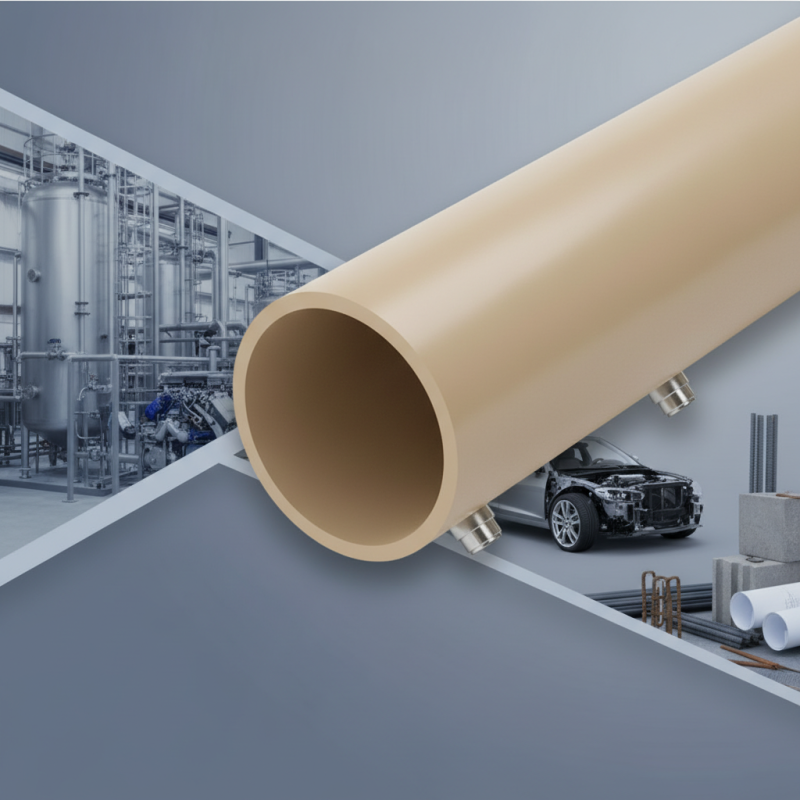
What is Cast Nylon Pipe?
Cast nylon pipe is made from high-quality cast nylon, known for its strength and durability. This material is molded instead of extruded, leading to improved strength and resistance to wear. The production process results in a denser structure, which enhances its capabilities in various industrial applications. Cast nylon pipes are often used in demanding environments such as chemical processing, mining, and food processing industries.
The unique properties of cast nylon make it suitable for transporting corrosive substances and operating under high-pressure conditions. Its ability to withstand temperature variations adds to its versatility. Users appreciate the lightweight nature of this pipe, making it easier to handle and install. However, it is crucial to assess specific requirements to choose the right thickness and dimensions for certain tasks.
Tips: Always conduct thorough testing before full-scale use. Consider environmental factors, as they can impact performance. Regular inspection ensures longevity and functionality. Investing in quality materials can yield long-term benefits, reducing the frequency of replacements.
Composition and Properties of Cast Nylon
Cast nylon, also known as polyamide, is a thermoplastic material created through the polymerization of caprolactam. Its unique composition gives cast nylon pipes exceptional mechanical properties, making them ideal for various industrial applications. According to industry reports, cast nylon boasts a tensile strength of up to 70 MPa and exhibits outstanding wear resistance. These characteristics are vital for equipment operating in harsh environments.
The properties of cast nylon can vary based on its formulation. For instance, when reinforced with fibers, tensile strength can surpass 100 MPa. Such enhancements increase the material's ability to withstand heavy loads. Cast nylon also demonstrates impressive chemical resistance, making it suitable for applications in chemical processing sectors. However, the material may absorb moisture over time, potentially impacting its dimensional stability. This is a critical consideration in design and engineering processes.
In practical application, cast nylon pipes are frequently used in the manufacturing of components like bearings, gears, and rollers. Their low friction properties contribute to energy efficiency in machinery. However, while cast nylon can be more cost-effective than metals, its long-term performance in extreme conditions must be evaluated. Regular maintenance and environmental assessments are essential to ensure reliability.
Manufacturing Process of Cast Nylon Pipes
Cast nylon pipe is produced through a controlled manufacturing process that ensures high quality and durability. This method involves pouring molten nylon resin into a mold. Once cooled, this forms a solid and dense pipe. Cast nylon pipes benefit from their exceptional mechanical properties, making them ideal for various industrial applications.
The manufacturing process is critical. It begins with selecting high-grade nylon materials. The resin is heated to liquid form, then introduced into molds designed for specific diameters and lengths. Cooling must be controlled to prevent defects. Reports indicate that cast nylon has a tensile strength of over 80 MPa and a thermal resistance of up to 100°C, which enhances its utility in demanding environments.
Tips: Ensure proper mold design to avoid imperfections. Regular quality checks during production can help identify issues early. Cast nylon pipes can be utilized in chemical processing, food production, and aerospace applications. Each sector values the resistance to abrasion and chemicals that these pipes offer. However, achieving uniformity can be challenging. Companies must constantly refine processes to improve yield and reduce waste.
Applications of Cast Nylon Pipes in Various Industries
Cast nylon pipes have gained significant traction in various industries due to their unique properties. These pipes exhibit excellent abrasion resistance and high tensile strength. Their lightweight nature simplifies handling and installation. A report by the Polyamide Pipeline Consortium shows a surge in usage, especially in sectors like water management and chemical processing. In these areas, the durability of cast nylon means reduced maintenance costs and increased efficiency.
In the automotive industry, cast nylon pipes are employed in fuel systems. They resist impacts from chemical exposure and high temperatures, which enhances safety. According to a study by the International Journal of Automotive Engineering, using cast nylon has led to a 30% reduction in breakdowns related to fuel system failures. However, challenges persist. Not all cast nylon pipes are created equal, and ensuring quality control remains vital for performance.
Moreover, the mining sector utilizes cast nylon pipes for transporting slurries. Their flexibility is beneficial in navigating uneven terrains. However, the variability in installation conditions can lead to performance issues. Industry reports note that not all applications have seen a success rate above 75%, indicating that proper assessments are crucial before deployment. Understanding the limitations and potential drawbacks is key for maximizing benefits.
What is Cast Nylon Pipe and Its Applications in Industries?
| Industry | Application | Benefits of Using Cast Nylon Pipe |
| Chemical Manufacturing | Transporting corrosive fluids | High chemical resistance and durability |
| Automotive | Fuel lines and coolant systems | Lightweight and impact resistant |
| Food Processing | Conveyor systems and piping | Non-toxic and FDA compliant |
| Construction | Drainage systems | Strong and weather resistant |
| Mining | Slurry and waste transport | Wear resistant and long-lasting |
| Marine | Pipework for fluids | Corrosion resistant and durable |
Advantages and Disadvantages of Using Cast Nylon Pipes
Cast nylon pipes are widely used in various industries due to their unique properties. These pipes exhibit high resistance to abrasion and chemicals, making them suitable for demanding applications. However, they also have drawbacks that need consideration.
One significant advantage of cast nylon pipes is their excellent wear resistance. According to a 2021 industry report, cast nylon pipes can last up to five times longer than traditional materials in abrasive environments. Their lightweight nature also simplifies installation and handling. However, their susceptibility to UV degradation can limit outdoor applications. It's crucial to assess environmental factors when using cast nylon.
Another consideration is the cost. While initial investments may be higher, longevity often offsets expenses. A report from the Polymer Development Association highlights that cast nylon pipes can reduce maintenance costs due to their durability. Yet, companies must weigh these benefits against potential downsides like brittleness in low temperatures, which might compromise their performance.
Tip: Always evaluate the environmental conditions in which cast nylon pipes will be used. Taking samples for testing can provide further insights into their suitability. Additionally, consider how installation impacts overall project timelines and costs.