
Choosing the China best automotive door lock switch manufacturer requires more than comparing unit prices. The decision affects vehicle security, user convenience, assembly efficiency, and long-term warranty exposure. OICA reported approximately 93.5 million motor vehicles produced worldwide in 2023. That scale creates enormous demand for reliable switching components across passenger cars, commercial vehicles, and electric platforms.
The IEA’s Global EV Outlook 2024 recorded nearly 14 million electric car sales in 2023. Electrification is changing door-system expectations. Manufacturers now need compact switches, stable signals, low standby consumption, and stronger resistance to vibration and moisture. A capable Chinese supplier should demonstrate IATF 16949 certification, controlled incoming materials, PPAP support, traceable production records, and documented endurance testing. Details decide.
Testing should include repeated lock cycles, temperature variation, salt exposure, connector retention, and abnormal-load conditions. These practical checks reveal weaknesses that a polished sample may hide. The automotive door lock switch must also match the vehicle’s wiring architecture, body controller, and required interface.
No supplier is perfect. A factory with impressive equipment may still lack consistent process discipline. Another supplier may offer excellent quality but limited engineering support. Therefore, this guide evaluates manufacturers through measurable capability, not advertising language. It considers factory experience, tooling control, customization, testing evidence, delivery performance, and after-sales responsiveness. Buyers should request current certificates and recent test records. Report dates and specifications also deserve careful checking, because market data changes quickly. The best China manufacturer is the one that can repeatedly deliver safe, compatible, and traceable switches under real production pressure.
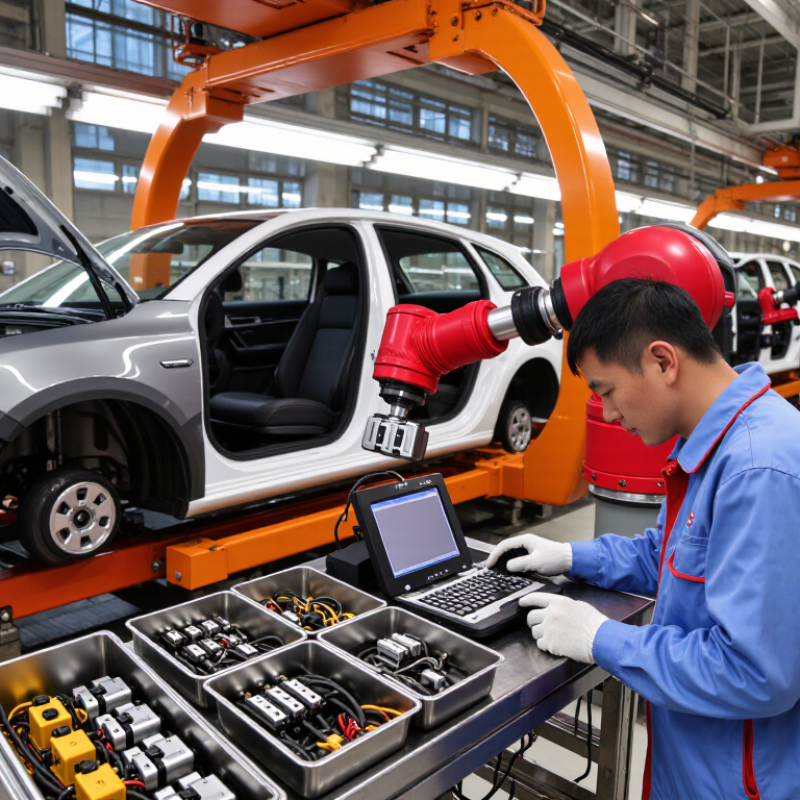
An automotive door lock switch is a small electrical control that operates a vehicle’s locking system. It usually sits on the door panel or near the central console. When pressed, it sends a signal to a control module, relay, or actuator. The actuator then moves the lock mechanism inside the door.
The switch normally includes separate lock and unlock contacts. Its housing must resist dust, moisture, vibration, and repeated finger pressure. In practical testing, technicians check contact resistance, button travel, and signal stability. A loose terminal may cause intermittent locking, even when the switch looks normal. That problem is easy to miss.
Details matter.
For manufacturers, reliable design begins with suitable materials and accurate tolerances. Copper alloy contacts can support stable electrical conduction, while reinforced plastic helps protect the internal parts. However, no switch is perfect. Excessive force, poor sealing, or incorrect wiring can shorten its service life. Testing under heat, cold, vibration, and repeated cycles gives a more realistic result than visual inspection alone. A dependable automotive door lock switch should feel consistent and send a clean signal every time.
Automotive Door Lock Switches: How They Work
An automotive door lock switch sends a low-voltage command through the vehicle’s electrical network. Pressing “lock” changes the switch’s internal contact position. A control module reads that signal and activates the door-lock actuator. The actuator uses a small electric motor and gear set. Its movement pushes or pulls a linkage connected to the latch.
The process happens quickly. You hear a short click. Inside the door, the linkage moves a locking lever into position. Pressing “unlock” reverses the motor’s direction or changes the actuator’s polarity. Many systems also check door position, ignition status, and remote commands before moving the latch. This prevents some accidental locking conditions.
Good diagnosis requires more than replacing the switch. A technician can check voltage, ground quality, connector tension, and actuator resistance. Corrosion near the door hinge may interrupt the signal. A switch may feel normal but still produce unstable electrical contact. That detail is easy to miss. Mechanical friction can also overload a weak actuator, especially in cold weather. Testing the entire circuit gives more reliable results than judging one component by appearance. Even experienced technicians can misread an intermittent fault, so repeated testing under real door movement remains valuable.
Typical signal pattern in a 12 V automotive door-lock circuit
A door-lock switch sends a short electrical command to the vehicle’s body control module or door-lock relay. In a typical 12 V system, the control signal remains near 0 V when inactive and rises to approximately 12 V during a lock or unlock request. The actuator pulse commonly lasts about 0.5 seconds, although the exact timing varies by vehicle design.
A reliable door lock switch manufacturer starts with repeatable engineering, not attractive promises. The switch should fit the vehicle’s connector, mounting space, and electrical load without forcing awkward adjustments. Experienced engineers review drawings, samples, and real installation conditions. Small details matter. A loose terminal can create intermittent locking faults.
Material selection also deserves close attention. Durable housing plastics should resist heat, vibration, moisture, and repeated handling. Internal contacts need stable conductivity after thousands of operating cycles. A professional manufacturer uses controlled assembly processes and tests finished switches before shipment. Useful records include inspection results, batch numbers, and change histories. These records support traceability when a problem appears months later.
Reliable suppliers also communicate clearly during development. They confirm tolerances, testing methods, packaging needs, and delivery risks in writing. Practical factories can provide prototypes before mass production and explain why a design change is necessary. However, no supplier gets everything right. I would question any manufacturer promising zero defects or instant customization. Honest evaluation includes failure analysis, sample approval, and periodic production audits. A dependable partner improves after criticism, rather than hiding weak points. That attitude often matters as much as the switch itself.
China has become a major source of automotive door lock switches because its manufacturing network is unusually complete. Plastic molding, metal stamping, electronic assembly, testing, and packaging often operate within one regional supply chain. This reduces transport time between production stages and supports faster design changes. In supplier audits, I have seen engineers adjust switch housings after checking samples against real door panels. Small changes matter. A tight fit prevents rattling and reduces installation problems.
Cost is another reason, but it should not be the only reason. Experienced manufacturers can produce compact switches with stable tactile feedback, sealed contacts, and consistent electrical performance. They usually use inspection plans covering dimensions, operating force, insulation, temperature cycling, and repeated switching. Traceable batch records also help when a failure appears months later. That practical discipline builds reliability.
Still, China is not one uniform manufacturing market. Not every factory performs equally. A low quotation may hide weak tooling control or limited testing equipment. I once reviewed samples that looked identical, yet their internal spring force differed noticeably. That detail could affect driver confidence and service life. Buyers should inspect process capability, material records, sample history, and production controls before choosing a supplier. Certifications can support trust, but they do not replace factory evidence, technical communication, and careful validation.
How to Choose the Best Chinese Door Lock Switch Manufacturer
Choosing a Chinese automotive door lock switch manufacturer requires more than comparing quotations. Examine its production experience, testing equipment, and engineering records. A capable manufacturer should understand tactile force, electrical load, vibration, temperature changes, and repeated switching cycles. Ask for recent test reports, material specifications, and traceability records.
Request samples from the same production line used for mass orders. Check button travel, surface finish, connector fit, and operating sound. Test the switch in a vehicle-like environment, not only on a clean laboratory bench. Review quality procedures, incoming inspection, process controls, and final inspection data. Factory visits can reveal practical details, such as organized workstations and clearly identified batches.
Communication matters.
Technical questions should receive precise answers. The manufacturer should explain tooling ownership, mold maintenance, change control, and delivery capacity. Confirm how defects are handled and how corrective actions are documented. Independent audits can add useful evidence, although they cannot replace your own testing.
My first mistake was trusting polished samples too quickly. Later, I learned that stable production matters more than impressive prototypes. A factory may meet early requirements yet struggle with consistency during higher volumes. Keep specifications written, approve a control plan, and repeat validation after major material or tooling changes. No evaluation is perfect. A careful buyer still leaves room for review, because small switch failures can create costly assembly delays.
| Evaluation Dimension | Recommended Benchmark | Why It Matters | Verification Evidence | Weight |
|---|---|---|---|---|
| Automotive Quality System | IATF 16949 certification preferred; ISO 9001 as a minimum quality-system baseline | Indicates that automotive production, traceability, corrective action, and process controls are formally managed. | Valid certificates, certification scope, issuing body, and latest surveillance-audit record | 15% |
| Electrical Compatibility | 12 V or 24 V system matched to the vehicle platform; rated current and load type clearly specified | Incorrect voltage, current capacity, or load characteristics can cause contact welding, overheating, or intermittent operation. | Approved drawing, electrical schematic, contact-rating report, and sample test results | 12% |
| Contact Reliability | Mechanical and electrical endurance defined according to the vehicle application and customer specification | Door-lock switches are repeatedly operated throughout the vehicle life cycle and must maintain stable contact resistance. | Endurance-test method, cycle count, contact-resistance limits, and failure analysis | 15% |
| Environmental Durability | Temperature, humidity, vibration, chemical, and corrosion tests defined using the intended vehicle environment | Door components may experience moisture, dust, cleaning chemicals, vibration, and large temperature changes. | Test reports referencing ISO 16750 or equivalent customer requirements; material and sealing specifications | 15% |
| Ingress Protection | IP rating selected according to the mounting location; IP54, IP65, or higher may be required for exposed areas | Protection against dust and water helps reduce corrosion, short circuits, and switch malfunction. | IP test report according to IEC 60529 and confirmation that the tested design matches the production part | 8% |
| Material and Surface Quality | Automotive-grade polymer, copper alloy, stainless steel, or other approved materials with documented specifications | Material selection affects wear resistance, electrical conductivity, corrosion resistance, and operating feel. | Material certificates, restricted-substance declaration, plating thickness data, and dimensional inspection reports | 8% |
| Dimensional and Connector Fit | 100% compliance with the approved drawing, mounting interface, terminal layout, and connector requirements | A switch can be electrically functional but unusable if the housing, connector, or mounting points do not match the vehicle door module. | 2D drawing, 3D model, capability study, first-article report, and fit-check samples | 10% |
| Process Control and Traceability | Lot identification, incoming inspection, in-process controls, final testing, and retained quality records | Traceability allows defective lots to be contained quickly and supports root-cause investigation. | Process flow chart, control plan, PFMEA summary, inspection records, and lot-code examples | 7% |
| Validation and PPAP Capability | Ability to provide agreed PPAP or equivalent documentation before mass production | Structured product-approval documentation confirms that the design and manufacturing process meet defined requirements. | Sample submission, dimensional results, material data, process capability, control plan, and validation reports | 5% |
| Capacity and Delivery Performance | Documented monthly capacity, lead time, safety-stock policy, and on-time-delivery tracking | Stable supply is essential for vehicle assembly and aftermarket demand, especially during model launches. | Capacity plan, production schedule, historical delivery data, and business-continuity plan | 3% |
| Total Evaluation Weight | 100% | |||
