How to Choose the Best 430 Stainless Steel Strips for Your Needs?
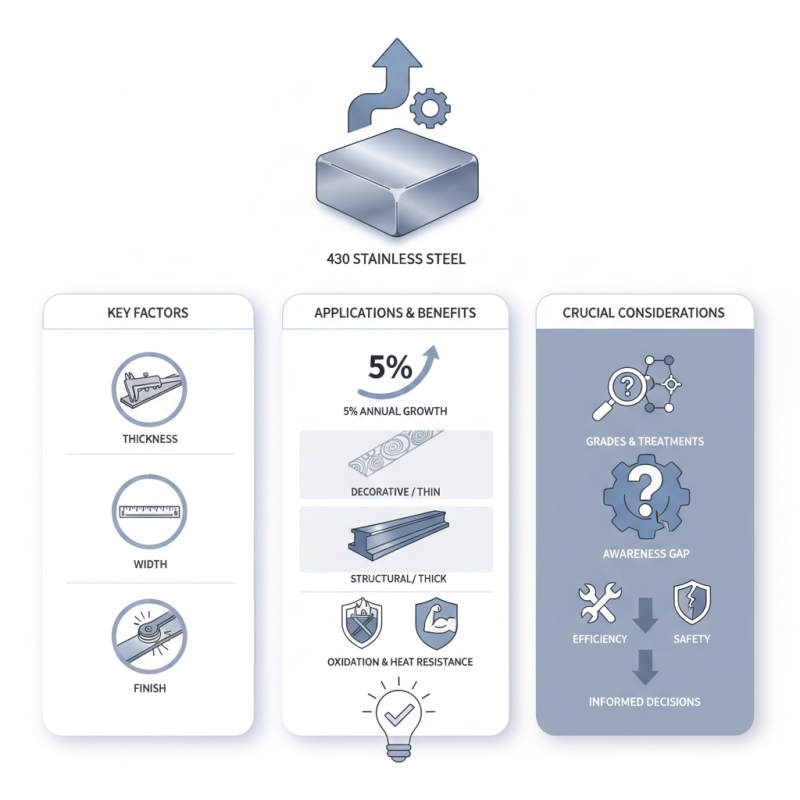
Choosing the right 430 Stainless Steel Strips is crucial for various applications in manufacturing and construction. This material is known for its excellent resistance to oxidation and high temperatures, making it a preferred choice in many industries. According to a recent market analysis, the demand for 430 stainless steel is projected to grow by 5% annually, reflecting its versatility and reliability.
When selecting 430 stainless steel strips, one must consider factors such as thickness, width, and finish. These elements affect performance and longevity in specific applications. For instance, thinner strips may be suitable for decorative purposes, while thicker options provide better structural support.
It's vital to understand the nuances of 430 stainless steel strips. Many manufacturers emphasize strength and corrosion resistance, yet there remains a gap in awareness regarding the proper grades and treatments available. This oversight can lead to suboptimal choices, impacting both efficiency and safety in projects. Recognizing these factors is an essential step toward making informed decisions.
Understanding the Properties of 430 Stainless Steel Strips
When choosing 430 stainless steel strips, understanding their properties is crucial. This ferritic stainless steel contains around 16-18% chromium and 0.12% carbon. It's magnetic, which makes it suitable for various applications. The steel is resistant to oxidation and corrosion, particularly in mildly corrosive environments. For instance, it is common in kitchen appliances, automotive parts, and decorative items.
The surface finish of 430 stainless steel strips can vary. Options include brushed, polished, or matte finishes. These surfaces can affect both aesthetics and performance. The choice depends on the final application. It's worth noting that while 430 stainless steel is less expensive than austenitic grades, it has lower corrosion resistance. Thus, careful consideration of the environment where it will be used is necessary.
There are limitations in choosing 430 stainless steel. Its ductility is often less than that of other stainless steels. This can be a concern in complex fabrication processes. Users may find themselves needing additional treatments to improve performance. It raises questions about whether 430 is the optimal choice for high-stress applications. Testing and consultation with a metal expert could help clarify these issues.
Identifying Your Specific Application Requirements
When selecting 430 stainless steel strips, it's crucial to define your application requirements. Different projects have unique demands. For example, some applications need corrosion resistance while others may prioritize heat resistance. Identifying these specific needs is essential.
Consider the environment where the strips will be used. If your project involves exposure to harsh chemicals or high humidity, a higher grade may be necessary. Thickness and finish are also important. Some applications may require a polished surface, while others might benefit from a matte finish.
It's worth reflecting on common mistakes made during this selection. Buyers often overlook dimensions or tolerances. A strip that is too thick or too thin can affect the overall performance. Precision is vital, and ensuring that specifications align with your intended use can save time and resources.
Material Selection for 430 Stainless Steel Strips
Comparing Different Grades and Finishes of 430 Stainless Steel
When selecting 430 stainless steel strips, understanding the different grades and finishes is crucial. The grade designation indicates the composition and potential applications. For instance, 430 stainless steel is primarily composed of chromium, providing good resistance to corrosion and oxidation. Many industries prefer this material for its balance of strength and affordability. Data from the Stainless Steel World show that 430 stainless steel holds about 16-18% chromium, making it suitable for general use in environments that do not require high resistance to corrosive acids.
The finish of the stainless steel strip plays a significant role as well. Common finishes include 2B, BA, and mirror. A 2B finish is smooth and reflective, offering decent corrosion resistance. In contrast, a bright annealed (BA) finish has a more excellent sheen, often used for aesthetic applications. Industry research indicates that around 45% of 430 stainless steel strips are supplied in the 2B finish, highlighting its popularity. However, users should reflect on their specific needs. The aesthetic appeal of a mirror finish may not justify its cost for less visible applications, leading to wasted resources and unnecessary expenses.
Lastly, consider the thickness of the strips. Standard thickness varies from 0.3 mm to 3 mm, and the choice usually depends on the end use. A thicker strip tends to provide better durability but can be less flexible. By understanding these nuances, you can better align your selection with your project's requirements.
Evaluating Supplier Reliability and Product Quality
When evaluating supplier reliability for 430 stainless steel strips, consider several key factors. Supplier certifications are crucial. A trustworthy supplier often has ISO 9001 certification. This indicates a commitment to quality management standards recognized globally. In addition, industry data shows that reliable suppliers maintain an average defect rate below 0.5% for stainless steel products.
Product quality is another area of focus. Look for suppliers that provide detailed specifications and test reports. This transparency reflects their confidence in product integrity. According to research from the Stainless Steel Development Association, high-quality stainless steel strips should have consistent properties, ensuring durability and performance. Verify the supplier’s material traceability. It ensures that you know the quality origin of your strips.
Tip: Request samples before placing an order. Testing samples can reveal a lot about consistency and reliability. Another consideration is communication. A responsive supplier often indicates good customer service and reliability. Reflect on the supplier's response time and willingness to address concerns. These details can provide insights into their overall professionalism.
Analyzing Cost vs. Performance Factors in Your Selection
When selecting 430 stainless steel strips, cost and performance are crucial elements. The initial cost might seem low, but long-term reliability should be a priority. Performance metrics such as corrosion resistance and tensile strength are vital to ensure that the strips can withstand the intended environment. Make sure to evaluate whether the material meets your project's specific requirements.
It's important to consider the application of the stainless steel strips as well. For example, strips used in high-temperature settings may require additional properties. Poor performance can lead to costly replacements or repairs. While certain options may save you money upfront, they may not perform well in the long run. Reflect on previous experiences where choices based solely on cost led to issues. Balancing budget constraints with performance expectations will lead to better decision-making.
Engaging with experts or reading detailed specifications can enhance your understanding. Yet, not all sources are equally reliable. Evaluate each source for credibility. Critical thinking is essential to refine your selection process. Relying solely on price tags may overlook vital factors affecting performance. Take time to reflect on past decisions to inform your current choices. This approach will guide you in selecting the best 430 stainless steel strips for your specific needs.
How to Choose the Best 430 Stainless Steel Strips for Your Needs?
| Dimension (mm) | Thickness (mm) | Weight (kg/m) | Cost (per kg) | Corrosion Resistance (1-10) | Strength (MPa) |
| 100 x 1.5 | 1.5 | 7.8 | 2.5 | 7 | 450 |
| 150 x 2.0 | 2.0 | 11.7 | 2.4 | 8 | 485 |
| 200 x 2.5 | 2.5 | 15.7 | 2.3 | 7 | 500 |
| 250 x 2.0 | 2.0 | 13.7 | 2.6 | 8 | 470 |
| 300 x 3.0 | 3.0 | 20.9 | 2.2 | 9 | 520 |