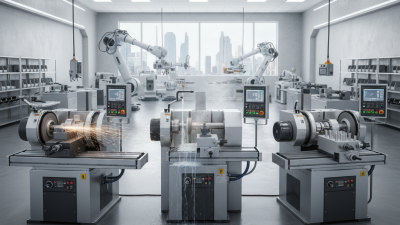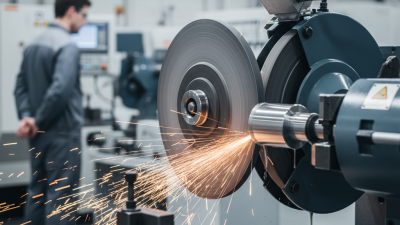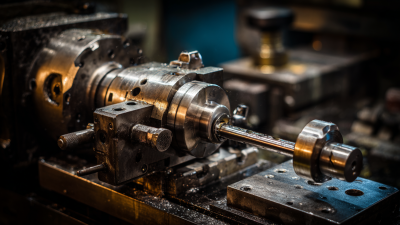
Choosing the best Grinding Machine from China requires more than comparing catalogue prices. It demands practical evaluation, technical judgment, and careful supplier verification. A machine may look impressive in photographs yet struggle with heat control, surface finish, or long-term accuracy.
Stephen Malkin, a respected grinding technology author, describes the process clearly: “Grinding is a machining process that uses abrasive grains as the cutting tool.” This principle should guide every purchasing decision. The machine must match the material, tolerance, wheel specification, production volume, and required surface finish. A tool for hardened steel will not automatically suit ceramic parts or aluminum components.
Look closely at the details. Check spindle speed, power, table movement, wheel size, coolant filtration, and achievable runout. Ask the manufacturer for test-grinding results using your actual workpiece. Request measurement records, inspection procedures, warranty terms, spare-parts availability, and technical training. A verified quality system, such as ISO 9001 certification, can support confidence, but it cannot replace an on-site audit.
Experience matters here. I have seen buyers focus on the lowest quotation and overlook installation costs, operator training, and delayed replacement parts. That mistake becomes expensive.
No checklist is perfect.
A reliable supplier should explain limitations, not hide them. Review sample surfaces under proper lighting, inspect calibration documents, and compare references from similar factories. The best Grinding Machine is not always the most advanced model. It is the machine that consistently meets your specifications, fits your workflow, and remains supportable after delivery from China.
Define the grinding task before comparing machines from China. Record the workpiece material, hardness, length, diameter, geometry, and batch size. State the required tolerance and surface roughness, such as ±0.01 mm and Ra 0.4 μm. These details determine the machine type, spindle power, wheel size, dressing method, and coolant capacity.
A practical specification sheet should include drawings, datum references, loading limits, and inspection methods. For hardened steel shafts, confirm wheel compatibility and thermal control. For ceramic parts, ask about stiffness, vibration, and low-force grinding.
ISO 230-2 provides methods for evaluating machine-tool positioning accuracy. ISO 21920 also defines modern surface-texture measurement language. Use these references when reviewing supplier test results.
Energy deserves attention. The U.S. Department of Energy reports that motor-driven systems consume about 69% of industrial electricity. Therefore, compare spindle efficiency, idle power, and coolant-pump demand, not only purchase price. Grand View Research projects continued global grinding-machine market growth through 2030, reflecting rising demand for automated precision production. Still, market growth does not prove suitability.
Ask the Chinese supplier to grind your actual material and send measured results. Request the wheel specification, cycle time, temperature data, and inspection records. A video is useful, but it is not evidence enough. I once focused too heavily on nominal accuracy and underestimated loading variation. That mistake was expensive. Include a trial-acceptance plan before ordering.
Choosing the best grinding machine from China starts with the workpiece, not the quotation. A surface grinder suits flat plates and precision faces. A cylindrical grinder handles shafts, pins, and round external surfaces. For high-volume production, a centerless grinder can remove the need for workholding. Internal grinders are better for accurate bores. Tool-and-cutter grinders fit maintenance rooms and small-batch tooling.
Application decides the machine.
Grand View Research estimated the global grinding machine market at about USD 5 billion in 2023, with continued growth through 2030. This expansion reflects demand for tighter tolerances and automated production. However, market growth does not guarantee a suitable machine. A cheaper model may lack spindle rigidity, coolant control, or stable thermal performance. I would request test grinding with the actual material, wheel specification, and target tolerance. Photos are not enough.
For Chinese suppliers, compare machine structure, control system, spindle speed, table travel, and service response. A shaft grinder needing 0.01 mm accuracy requires different evidence from a shop grinding simple steel plates. Ask for inspection records, sample parts, and calibration certificates linked to ISO 230-2 measurement practices. Check repeatability after several cycles, not only the first result. That detail is easy to miss. One practical weakness remains: published specifications often describe ideal conditions. Real performance may change with operator skill, coolant temperature, and wheel dressing frequency. A factory visit or independent acceptance test can expose that gap.
| Grinding Machine Type | Primary Application | Typical Workpieces | Suitable Materials | Typical Accuracy | Surface Finish Range | Main Advantages | Key Limitations | Recommended Buyer Profile | Selection Priority |
|---|---|---|---|---|---|---|---|---|---|
| Surface Grinding Machine | Producing flat, parallel, and square surfaces | Machine plates, dies, molds, guideways, fixtures, and carbide inserts | Carbon steel, tool steel, stainless steel, cast iron, carbide, and ceramics | Approximately ±0.005–0.02 mm, depending on machine condition, workholding, and process control | Approximately Ra 0.2–1.6 µm | Good flatness control; suitable for precision tooling; relatively simple workholding | Not intended for cylindrical profiles; magnetic chucks may not hold non-magnetic materials | Tool rooms, mold manufacturers, maintenance workshops, and general precision machining plants | ★★★★★ Flatness |
| Cylindrical Grinding Machine | Grinding external cylindrical, tapered, and shoulder surfaces | Shafts, pins, sleeves, bushings, bearing components, and spindles | Hardened steel, alloy steel, stainless steel, cast iron, and superalloys | Approximately ±0.005–0.015 mm for common production applications | Approximately Ra 0.2–0.8 µm | Excellent roundness and diameter control; effective for hardened components | Requires accurate centers or fixtures; less suitable for flat parts and irregular shapes | Automotive, bearing, hydraulic, pump, power-transmission, and general engineering manufacturers | ★★★★★ Roundness |
| Internal Grinding Machine | Grinding the internal diameter of holes and bores | Bearing rings, hydraulic sleeves, gears, bushings, and precision housings | Hardened steel, alloy steel, stainless steel, cast iron, and carbide | Approximately ±0.005–0.015 mm for controlled production conditions | Approximately Ra 0.2–0.8 µm | High bore accuracy; can process hardened internal surfaces after heat treatment | Small grinding wheels wear quickly; setup and wheel selection can be demanding | Manufacturers requiring accurate bores, bearing seats, seals, and close-tolerance sleeves | ★★★★★ Bore accuracy |
| Centerless Grinding Machine | High-volume grinding of round parts without centers | Pins, rollers, tubes, rods, needles, and small shafts | Steel, stainless steel, brass, copper alloys, and selected ceramics | Approximately ±0.005–0.02 mm, influenced by setup and regulating-wheel condition | Approximately Ra 0.2–0.8 µm | Very high throughput; no center holes required; suitable for continuous production | Limited flexibility for interrupted surfaces, steps, shoulders, and non-round workpieces | High-volume producers with stable part designs and repeatable batch requirements | ★★★★★ Production speed |
| Tool and Cutter Grinding Machine | Sharpening and manufacturing cutting tools | End mills, drills, reamers, milling cutters, broaches, and form tools | High-speed steel, carbide, cermet, and selected ceramic tool materials | Approximately ±0.01–0.03 mm, depending on machine configuration and operator skill | Approximately Ra 0.2–1.6 µm | Flexible tool geometry; supports resharpening and small-batch tool production | Programming and setup can be complex; productivity is lower for large simple batches | Tool manufacturers, machining workshops, maintenance departments, and resharpening centers | ★★★★★ Tool flexibility |
| Jig Grinding Machine | Ultra-precise finishing of holes, contours, and die features | Press dies, injection molds, precision jigs, gauge components, and die plates | Hardened tool steel, carbide, and other hard, stable materials | Approximately ±0.002–0.01 mm in suitable controlled conditions | Approximately Ra 0.1–0.4 µm | Very high positional accuracy; excellent for small holes and complex die features | High capital cost; slower material removal; requires skilled operators and stable temperature control | Precision mold, die, gauge, and aerospace component manufacturers | ★★★★★ Positional accuracy |
| Gear Grinding Machine | Finishing gear teeth after heat treatment | Spur gears, helical gears, splines, pinions, and transmission components | Hardened alloy steel and carburized or nitrided gear steels | Commonly suitable for high-accuracy gear classes; exact grade depends on machine, tooling, and inspection | Approximately Ra 0.2–0.8 µm on tooth flanks | Improves tooth profile, lead, noise behavior, and transmission accuracy | Specialized and expensive; limited to gear-related geometries; requires dedicated tooling | Automotive, robotics, wind-power, aerospace, and industrial gearbox manufacturers | ★★★★★ Gear quality |
| Creep-Feed Grinding Machine | Deep profile grinding and high stock removal in one pass | Turbine blades, form tools, slots, complex profiles, and hardened components | Tool steel, stainless steel, nickel-based superalloys, and difficult-to-machine alloys | Approximately ±0.01–0.03 mm, depending on geometry and thermal control | Approximately Ra 0.4–1.6 µm | Deep cuts; reduced number of operations; effective for difficult profiles and hard materials | Generates considerable heat; requires coolant management and rigid machine construction | Heavy-duty precision manufacturers processing complex or heat-resistant components | ★★★★★ Profile removal |
| Belt Grinding Machine | Deburring, blending, finishing, and general stock removal | Weldments, fabricated parts, castings, sheet-metal parts, and hand tools | Steel, stainless steel, aluminum, brass, and plastics with suitable abrasives | Generally lower dimensional accuracy; commonly used for preparation rather than final precision grinding | Approximately Ra 0.8–6.3 µm, depending on abrasive grit and pressure | Fast setup; versatile; suitable for irregular shapes and weld cleanup; relatively economical | Lower geometric precision; finish depends strongly on operator technique and belt condition | Fabrication shops, welders, maintenance departments, and finishing operations | ★★★★★ Versatility |
| Double-Disc Grinding Machine | Simultaneous grinding of two parallel faces | Washers, connecting rods, bearings, valve plates, and thin precision components | Steel, stainless steel, cast iron, non-ferrous alloys, and selected ceramics | Approximately ±0.005–0.02 mm for thickness control in production applications | Approximately Ra 0.2–1.6 µm | High productivity; efficient thickness control; processes two faces at the same time | Best suited to repeatable part geometries; less flexible for one-off or complex components | Medium- and high-volume manufacturers of flat, disc-shaped, or plate-like parts | ★★★★★ Thickness consistency |
Note: Accuracy and surface-finish values are typical engineering ranges, not guaranteed specifications. Actual results depend on machine rigidity, spindle condition, wheel type and dressing, workholding, coolant control, material condition, operator skill, and inspection equipment.
Choosing a grinding machine from China requires measurable evidence, not attractive photographs. Start with accuracy. Request test results based on ISO 230-2, including positioning deviation, repeatability, and thermal drift. A 5-micron claim means little without workpiece size, measurement temperature, and test method. Ask for a sample grinding trial using your actual material. Hard alloys, stainless steel, and ceramics demand different wheel systems and spindle behavior. Inspect the surface finish under magnification. Small details matter.
Capacity must match real production, not an optimistic catalogue number. Check maximum diameter, table travel, wheel size, spindle power, and continuous-duty limits. Grand View Research’s 2024 market analysis projects steady growth in grinding equipment demand, driven partly by automated production. That trend makes loading systems and process monitoring increasingly useful. The International Energy Agency’s Energy Efficiency 2023 report identifies industry as a major global energy user, so measure spindle power and coolant consumption before buying. I would also request energy data during idle and full-load cycles. Vendors may resist this. That hesitation deserves attention. Useful features include automatic dressing, in-process gauging, vibration monitoring, and easy access to replacement components. Control screens are helpful, but service response matters more. A perfect specification sheet cannot repair long production delays.
Choosing a grinding machine from China starts with the manufacturer, not the catalogue price. In factory evaluations, I look for machining history, export records, and clear technical communication. Ask who designs the spindle, controls vibration, and tests wheel balance. A serious supplier should provide drawings, tolerances, and a realistic production schedule. Factory photos are not evidence. Visit virtually, or use an independent inspector.
Certifications need careful checking. Request current certificates, issuing bodies, covered models, and expiry dates. A certificate outside the machine’s scope offers little protection. Quality also depends on traceable inspections. Ask for incoming material records, assembly checklists, calibration reports, and final test data. Measure surface finish and dimensional accuracy on sample parts. Do not accept only a polished demonstration. It may be staged.
Support often determines whether a machine earns its cost. Confirm installation training, spare-part availability, response times, and service languages before payment. Put these details into the contract. Test remote troubleshooting with practical questions. Can the technician identify abnormal spindle noise from a recording? Can they guide a safe alignment check? I have seen reliable machines weakened by vague support terms. My own assessment can be imperfect, especially when samples hide long-term wear. Run an extended trial and ask for customer references with similar workloads.
A low quotation can hide important costs. Compare the complete price, not only the machine figure. Ask for tooling, export packing, spare parts, shipping, taxes, and commissioning fees. Request a line-by-line pro forma invoice. Then match motor power, grinding accuracy, table size, and material capacity with your process. A cheap machine may struggle with hardened steel. That delay becomes expensive.
Customization should be measurable. Send drawings, sample parts, tolerances, and expected daily output. Ask the supplier to confirm each item in a technical agreement. Request a recorded test using your material. Check surface roughness, cycle time, coolant flow, and dimensional stability. I once saw a machine pass a general demonstration but fail on a narrow tolerance. The lesson was uncomfortable: never approve from photographs alone. Leave room for correction.
Delivery planning needs dates, not promises. Confirm production completion, inspection, packing, port handling, and estimated arrival separately. Ask for crate photos and a packing list before shipment. Installation should include leveling, electrical requirements, operator training, and remote support. Clarify who pays for travel and how many service days are included. Warranty terms deserve equal attention. Check coverage for the spindle, control system, motors, and labor. Ask about response times and replacement-part availability. A written service procedure is stronger than polite assurances. Insist on evidence.