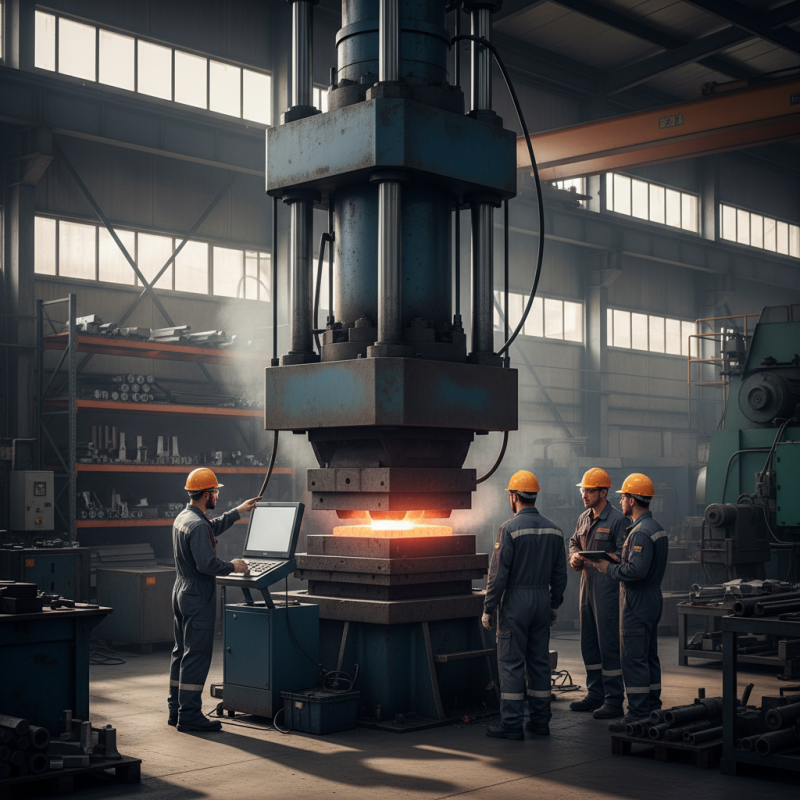
How to Choose the Best Hot Forging Press for Your Needs?
Choosing the right hot forging press is crucial for your production needs. The right machine can enhance efficiency and improve product quality. However, selecting a hot forging press isn't always straightforward. Various factors come into play, such as size, capacity, and features.
It's vital to consider your specific requirements. What materials will you be forging? How often will you use the equipment? These details can significantly influence your choice. A well-informed decision can save costs and prevent future issues.
Many companies face challenges when investing in a hot forging press. They may overlook essential aspects, leading to regrets later on. Understanding your needs, consulting with experts, and conducting thorough research can help mitigate these risks and ensure a successful purchase.
Factors to Consider When Selecting a Hot Forging Press
When selecting a hot forging press, several factors should guide your decision. First, consider the capacity of the press. The force required for your applications will determine this. A report by the International Journal of Machine Tools and Manufacture emphasizes that presses with adequate tonnage significantly improve production efficiency. Analyzing your specific needs can prevent underperformance.
Another critical factor is the press type. Different applications may benefit from either a mechanical or hydraulic press. Mechanical presses are known for high speed, making them ideal for high-volume production. Conversely, hydraulic presses offer better control for detailed components. The American Society of Mechanical Engineers (ASME) highlights the trade-offs between speed and precision in forging applications.
Tips: Evaluate production volume regularly. It ensures that your press capabilities match your operational demands. Also, consider energy efficiency. A press that consumes less power can significantly reduce operational costs. Lastly, don't overlook the importance of maintenance. A well-maintained press can operate reliably, reducing downtime and improving output quality.
Understanding the Different Types of Hot Forging Presses Available
When choosing a hot forging press, understanding the different types available is crucial. There are primarily three types of hot forging presses: mechanical, hydraulic, and screw presses. Each type has its own characteristics and suitability. Mechanical presses are known for their speed and efficiency. They can produce high-volume parts but may have limitations in force application.
Hydraulic presses offer flexibility and control, making them ideal for complex designs. They can apply consistent pressure, which is essential for intricate shapes. However, their operational speed is typically slower than that of mechanical presses. Lastly, screw presses are unique due to their continuous operation, providing high force and efficiency. Yet, they may require more maintenance compared to other types.
Selecting the right press involves weighing these factors carefully. Consider your production volume and the complexity of the parts. It’s common to overlook maintenance needs, which can lead to costly downtime. Reflecting on your specific requirements can guide you to the best choice. Understanding each type's advantages and limitations is essential for effective decision-making.
Hot Forging Press Types and Their Capacities
Key Specifications to Evaluate: Force, Stroke Length, and Speed
When selecting a hot forging press, key specifications play a critical role. The force exerted by the press is paramount. Reports indicate that a force capacity of 1,500 to 3,500 tons is typical for medium-sized industrial operations. This range can support a variety of tasks, from shaping to bending materials effectively. Insufficient force may lead to improper forging, while excessive force could cause material waste and increased costs.
Stroke length is another vital specification. It typically measures between 300 mm to 600 mm in industrial presses. A longer stroke allows for more complex shapes and larger workpieces. However, it can complicate the mechanism and increase maintenance needs. A press with an average stroke length may not handle all projects. This can affect production efficiency, resulting in potential downtime and rework.
Speed is crucial in meeting production demands. Average operation speeds vary, from 60 to 180 strokes per minute. A faster press can boost productivity, but it requires precise control. Slower presses may offer more control but can fall short in high-demand environments. Balancing speed with quality is essential and deserves careful consideration, as pushing limitations can lead to defects. Always evaluate what aligns with your operational needs, as not all specifications meet every unique requirement.
Analyzing Energy Efficiency and Operational Costs of Forging Presses
When selecting a hot forging press, operational costs and energy efficiency are critical factors. These costs can significantly impact your overall production budget. A well-designed hot forging press often incorporates advanced technology to optimize energy use. An efficient press reduces electricity consumption while maintaining high performance during operations.
Understanding how a press consumes energy is essential. Some presses may have high upfront costs but save you money in the long run. It’s crucial to analyze energy ratings and operational parameters. Evaluate the average cycle times and the energy used per cycle. These details directly impact your monthly energy bills.
Establishing a clear picture of maintenance expenses is equally important. Regular maintenance prolongs equipment life but can lead to increased operational costs. Keep track of these expenses to avoid unexpected financial surprises. Weighing long-term savings against initial investments can be tricky. Consider seeking expert advice or conducting feasibility studies to ensure you make a well-informed decision.
Importance of Supplier Reputation and After-Sales Support in Your Decision
When selecting a hot forging press, the supplier's reputation carries significant weight. A trustworthy supplier often reflects their commitment to quality. Their history can provide insights into reliability and customer satisfaction. Take the time to research customer reviews and industry feedback. A well-respected supplier is likely to have a proven track record in delivering durable and efficient machinery.
After-sales support is another crucial aspect. Even the best machinery may encounter issues. Effective support ensures you receive timely assistance when problems arise. Assess the responsiveness and availability of the supplier's support team. This can vary, and not every company does an excellent job. Some may only provide limited guidance, leaving you to troubleshoot alone. A solid after-sales plan reduces downtime and helps maintain productivity.
In addition, consider the training provided for your team. Equipment can be complex, and proper handling is vital. A supplier that prioritizes your expertise shows dedication to your success. Evaluate not only their products but also their approach to customer relationships. Investing in a supplier with strong after-sales support can lead to long-term gains. However, even reputable suppliers can have limitations. It’s wise to reflect on their full range of services.