
Choosing the right Cryo Chiller starts with the process, not the product brochure. A laser laboratory, medical imaging suite, and pilot plant may all need stable cooling, yet their heat loads and operating patterns differ. A unit that performs well during steady operation may struggle when equipment cycles rapidly. Small details matter: the coolant, room temperature, available floor space, and the distance between chiller and equipment.
Lord Kelvin, a pioneer in thermodynamics whose work informs cryogenic engineering, wrote: “When you can measure what you are speaking about, and express it in numbers, you know something about it.” That principle is useful when comparing a Cryo Chiller. Look beyond the headline cooling capacity. Check the specified temperature range, cooling capacity at your actual setpoint, temperature stability, flow rate, and heat rejection requirements. Ask how performance changes under real operating conditions, not just ideal test conditions.
There is no universal best model. A compact system may fit neatly beside a benchtop instrument, while a larger installation may need remote heat rejection and planned service access. Request data for your actual load profile, and confirm which fluids and connections the manufacturer supports. Check noise, maintenance intervals, alarms, and parts availability. Then compare the full operating cost, not only the purchase price. Specifications can look reassuring. Sometimes they are incomplete. This guide explains how to match these practical factors to your application, so your selection is defensible—and easier to review when conditions change.
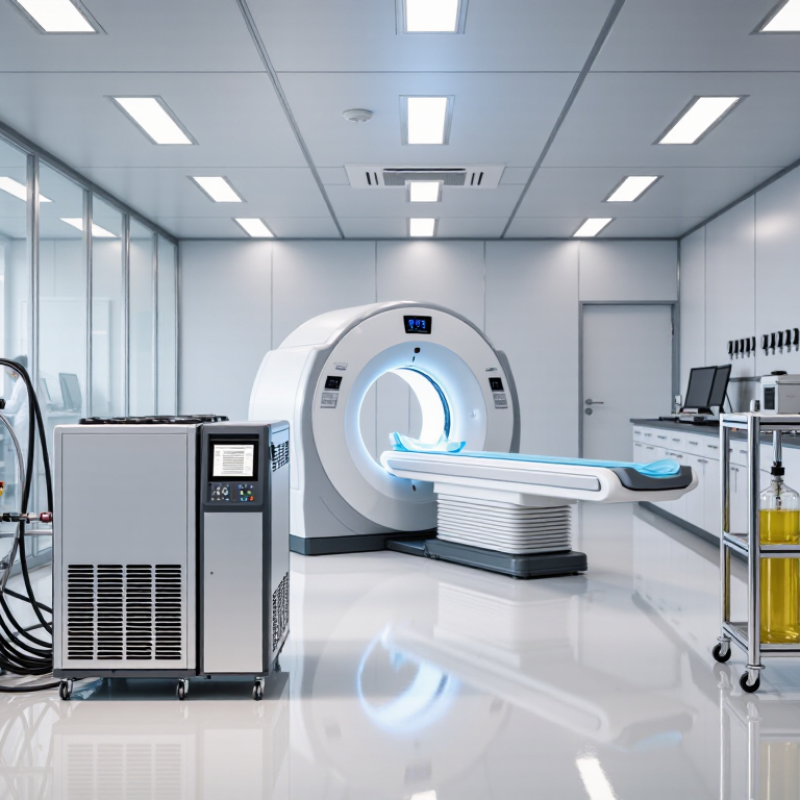
Before comparing cryo chillers, write down the temperatures your process actually needs. Record both the target temperature and the warmest acceptable limit. A sample may need to stay near a set point, while a test fixture may tolerate wider swings. Those are different requirements. Small details matter.
Estimate the heat load across the full operating cycle, not just at startup. Include heat entering through insulation, tubing, and connected equipment. Note how often the system runs, how quickly it must cool, and whether loads change between batches. Measure coolant flow and pressure requirements, too. A chiller that reaches the target temperature may still struggle to remove heat fast enough. Check the coolant’s material compatibility and the room’s ventilation and ambient temperature.
Keep a record of real measurements, even if the first estimate is rough. It is easy to overlook heat from a pump or an opened enclosure. That happens. Leave reasonable capacity for variation, but avoid sizing far beyond the measured need; oversized equipment can add cost and control challenges. Ask suppliers to clarify performance at your actual operating temperature and heat load, since capacity can change across the temperature range. Verify the electrical supply, footprint, alarms, and maintenance access before selecting a unit. A clear requirement sheet makes comparisons more useful and exposes assumptions that need testing.
Cryo chillers differ in cooling method, capacity, and maintenance demands. Closed-cycle systems, including pulse-tube and Gifford–McMahon designs, keep cooling without routine cryogen refills. Pulse-tube models have fewer moving parts near the cold end, while Gifford–McMahon systems are widely used for demanding low-temperature loads. Liquid-nitrogen-based systems can cool quickly, but require a dependable supply and careful venting. There is no universal winner.
Compare capacity at your actual operating temperature, not just the largest figure on a specification sheet. A unit rated for 100 watts at 80 kelvin may deliver far less at 20 kelvin. Include heat leaking through supports, wiring, and access ports, plus the load from samples or equipment. Ask suppliers for cooling curves and cooldown times under conditions close to yours. A slightly oversized system can provide useful margin, though excessive capacity may add cost and complexity. This detail is easy to overlook.
Tips: Write down your target temperature, steady heat load, peak load, and acceptable cooldown time. Check noise, service intervals, footprint, and power needs. Leave room for uncertainty; measured loads sometimes differ from early estimates. If possible, test with a representative thermal load before choosing.
Start with the process temperature, not the chiller’s lowest advertised setting. A sample line may need stable cooling at -40°C, while a test chamber may require much colder conditions. Leave room for heat entering through insulation, fixtures, and frequent door openings. A setpoint alone can mislead.
Check the coolant against the full operating range. The NIST Chemistry WebBook (Standard Reference Database 69) gives normal boiling points of 77.36 K for nitrogen and 87.30 K for argon. These values show how different cryogenic fluids operate; they are not recommended chiller setpoints. Actual conditions depend on pressure and system design.
Small mismatch, big trouble.
Confirm the chiller’s stated supply and return temperatures, then compare them with the process load and required stability. Ask for performance data at your operating conditions, not just a headline capacity.
Compatibility is equally practical.
Match hose and fitting sizes, coolant type, flow rate, pressure limits, electrical supply, and control signals to the connected equipment. Check whether the fluid can contact every wetted material, especially seals and tubing. A technically capable unit may still perform poorly with restrictive pipework or insufficient flow.
I would double-check the assumptions here; they are easy to overlook.
Record the actual operating temperature and flow during commissioning, then revisit the selection if the process changes.
How to Choose the Best Cryo Chiller for Your Needs
Evaluate Energy Use, Reliability, and Safety Features
Choosing a cryo chiller starts with the heat load it must remove, but energy use deserves equal attention. Compare power draw at your actual operating temperature and cooling load, not only at a catalog’s best-case point. A unit that cycles frequently may use more electricity and cause temperature swings. Ask for performance data across your expected ambient range. Small details matter. Check pump and compressor schedules against planned duty cycles, and allow headroom for warm starts or added equipment.
Reliability is more than a long service-life claim. Review maintenance intervals, alarm history, spare-part availability, and recovery time after a fault. If possible, log temperature stability during a representative run, including process changes. Check the logs. Safety features should include clear over-temperature alarms, pressure protection, leak detection where relevant, and an accessible emergency shutoff. Confirm that operators can see or hear alarms from their usual position. Have a qualified technician verify ventilation and electrical requirements, especially in a cramped equipment room. One weakness in many comparisons: buyers score features but overlook who will test them routinely. A safety device that is never checked is reassuring only on paper.
Evaluate energy use alongside reliability and safety—not just cooling capacity.
Energy use: Electrical input is calculated as cooling capacity divided by coefficient of performance (COP), using a constant 1 kW cooling load. These are illustrative calculations, not specifications for particular equipment; actual COP depends on operating temperature and load. Reliability and safety: Compare documented uptime and service requirements under your operating conditions, and verify applicable alarms, protective interlocks, emergency shutdown, and pressure-protection features.
When comparing cryo chillers, look beyond the purchase price. Estimate electricity use at your actual setpoint, cooling load, and annual operating hours. A low-cost unit can become expensive if it runs continuously or needs frequent specialist visits. The U.S. Department of Energy’s Operations & Maintenance Best Practices guide reports that effective maintenance programs can reduce energy use by 5–20%. That range is not a guarantee for every chiller, but it shows why service planning belongs in the budget.
Ask suppliers to itemize commissioning, preventive maintenance, response times, spare-part availability, and repair rates. Check whether technicians can reach your site quickly, and whether routine checks can be handled by your own staff. Small details matter: a clogged filter, delayed sensor replacement, or unavailable component can interrupt temperature-sensitive work. Get service terms in writing. Then compare total ownership costs over the period you expect to use the equipment, not just the first-year quote. For a small lab with light use, a simpler system may be sensible; a facility running around the clock may value faster support more highly. I would still challenge any estimate that assumes perfect uptime. Real operating conditions are messier. DOE’s reported savings vary by system and maintenance practice, so request performance data under conditions close to your own.
Match the cooling approach to your required temperature, cooling load, budget, and in-house service capabilities. The comparisons below are general planning guidance; actual performance depends on the system design and operating conditions.
| Cooling approach | Typical temperature capability | Relative upfront budget | Service and maintenance needs | Operating-cost considerations | Best suited to | Key trade-off |
|---|---|---|---|---|---|---|
| Single-stage mechanical process chiller | Commonly used for process cooling above approximately −20 °C; the usable range depends on the refrigerant and unit design. | Low to medium | Requires routine checks of heat exchangers, fans or pumps, electrical components, and the refrigeration circuit. Refrigerant work should be performed by qualified technicians. | Electricity use depends on cooling load, ambient temperature, set point, and system efficiency. | Applications that need chilled or moderately low-temperature fluid rather than deep cryogenic temperatures. | May not reach the required low temperature, especially under high load or warm ambient conditions. |
| Cascade mechanical chiller | Often designed for roughly −40 °C to −100 °C, with the exact limit determined by its refrigeration stages and configuration. | Medium to high | More complex than a single-stage system. Requires qualified refrigeration service, leak checks, and attention to compressors, controls, and heat rejection. | Lower temperature operation typically increases energy demand; actual consumption varies with load and design. | Continuous-duty laboratory or industrial processes needing sub-zero circulation without routine cryogen deliveries. | Higher equipment complexity and service requirements; confirm capacity at the actual set point. |
| Closed-cycle cryocooler | Cold-head temperatures can extend below 100 K (−173 °C); achievable temperature and cooling capacity depend strongly on the cryocooler type and heat load. | High to very high | Needs specialist support. Maintenance may involve the cold head, compressor, seals, vibration control, and scheduled service based on the model. | Electrical demand and maintenance costs should be assessed against the required cooling capacity at the target temperature. | Small, highly localized, or instrument-based applications requiring very low temperatures without an open cryogen supply. | Cooling capacity at very low temperatures is often limited; check the capacity-versus-temperature curve, not just the lowest temperature. |
| Liquid-nitrogen cooling system | Liquid nitrogen boils at about −196 °C (77 K) at atmospheric pressure; the process temperature depends on heat transfer and control design. | Low to medium for basic equipment; installation and safety systems add cost | Requires reliable cryogen supply, safe storage and handling procedures, suitable ventilation, and oxygen-deficiency risk controls. Liquid nitrogen is consumed rather than recirculated. | Cost depends on local nitrogen pricing, delivery frequency, boil-off, and the heat load. | Intermittent or very-low-temperature duties where cryogen supply is available and consumption is acceptable. | Ongoing cryogen use and safety planning can outweigh a lower initial equipment cost. |
Selection check: Compare cooling capacity at the required fluid temperature and ambient conditions, not only the minimum temperature. Also verify flow rate, fluid compatibility, heat rejection, installation requirements, service access, and the supplier’s recommended maintenance schedule. Relative budget levels are indicative and are not quotations.
