
Choosing the right Dicing Machine can shape product quality, production speed, and long-term operating costs. A poor match may leave rough edges, cracked pieces, excess waste, or frequent downtime. The correct choice depends on more than cutting capacity. Material type, target dimensions, blade control, sanitation, maintenance access, and operator safety all deserve careful attention.
Food-processing equipment specialist Dr. Zeki Berk emphasizes a practical principle: “Process control begins with understanding the product.” That idea matters on the factory floor. A soft potato behaves differently from a chilled meat block. A fragile semiconductor wafer demands different accuracy from a frozen vegetable line. The machine must fit the product, not merely the purchasing budget.
This guide presents seven practical tips for evaluating a Dicing Machine before making a decision. It considers cutting consistency, throughput, blade performance, cleaning requirements, automation, service support, and total ownership cost. Ask suppliers for product trials. Inspect the cut surfaces under real operating conditions. Measure waste, not just speed.
Some decisions will remain imperfect. A faster machine may require more complex maintenance. A lower purchase price may hide expensive parts or limited technical support. We should question impressive specifications. Real performance often changes during long shifts, product temperature changes, and blade wear. Careful testing creates stronger evidence than polished brochures. The best choice is the machine that performs reliably in your actual process, with measurable results and manageable risks.
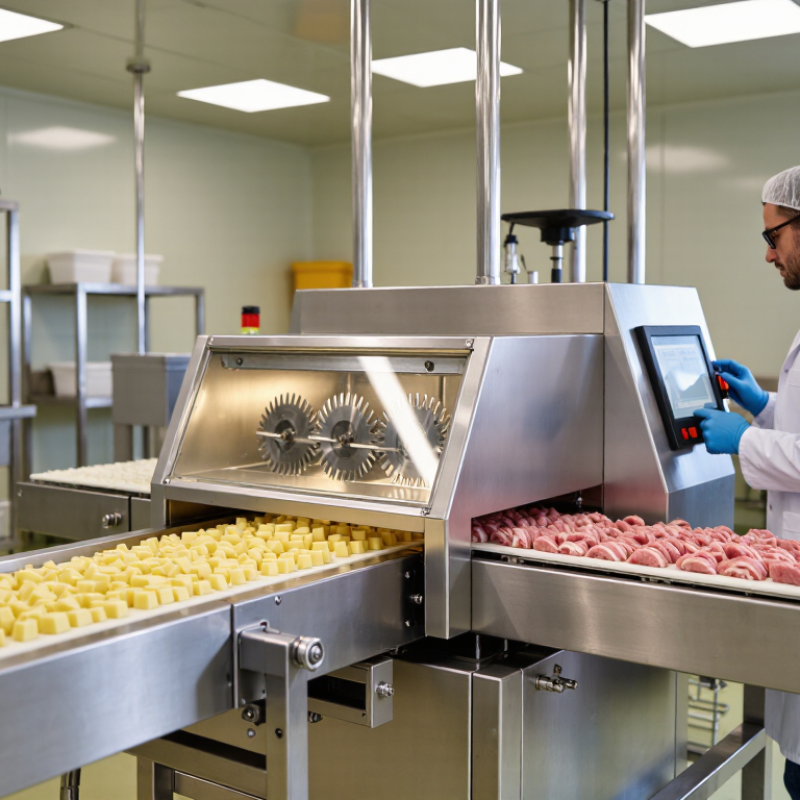
Start with your real production target, not the machine’s largest advertised figure. Dicing machines may handle 500–3,000 kg/h under ideal conditions. Actual output depends on product size, firmness, temperature, and cut dimensions. A chilled vegetable may process differently from a soft fruit. Record hourly demand during your busiest shift. Then allow reasonable capacity for cleaning, loading, and brief stoppages. More capacity is not always better.
Ask how each throughput rating was measured. Was the test based on a uniform product, continuous feeding, and one specific cut? Request test data using your own raw material whenever possible. A 3,000 kg/h rating can look impressive, but unstable feeding may reduce usable output. Calculate effective capacity after trimming, changeovers, and operator adjustments. A simple spreadsheet helps, although it can still hide real production problems. Leave a practical margin of around 15–25 percent. This reduces pressure during seasonal peaks.
Higher speed should not create crushed edges, uneven cubes, or excessive waste. Inspect samples from different operating speeds. Check cut consistency after thirty minutes, not only during a short demonstration. Experienced technicians also examine blade access, adjustment time, and cleaning routines. These details affect daily output more than brochures suggest. I would also test smaller batches, because a machine that performs well at full load may behave poorly with irregular feeding. Reliability is measured on ordinary days.
When choosing a dicing machine, specify the required cut dimensions before comparing technical features. A 3–30 mm adjustment range supports thin slices, medium cubes, and larger portions. However, a wide range does not guarantee consistent results. Ask how accurately the machine holds each setting during continuous operation. Small errors matter. A 2 mm deviation can affect cooking time, packaging weight, and product appearance.
Match the adjustment range to your actual production needs. If most batches require 8–12 mm pieces, prioritize stability within that zone instead of choosing the widest range. Check how operators change settings, read measurements, and secure cutting components. Clear scales and repeatable controls reduce guesswork between shifts. Measure the samples. Use a ruler or calibrated gauge, not visual judgment alone.
Material properties also influence final dimensions. Firm vegetables may produce cleaner cuts than soft or fibrous products. Test several batches at 3 mm, 10 mm, and 30 mm when possible. Record piece variation, surface damage, and processing speed. A machine may perform well at 10 mm but struggle with very small pieces. That assumption can fail. Review maintenance records, blade adjustment procedures, and safety instructions with trained technicians. Real production trials often reveal limitations that a specification sheet does not show.
Choosing the right dicing machine starts with the product, not the machine’s advertised capacity. Firm vegetables need sharp, stable blades and controlled pressure. Soft fruit needs gentler handling to prevent crushing and juice loss. Test texture at the actual processing temperature. A chilled product may cut cleanly, while a warmer one can smear.
Product shape also matters. Long roots, round produce, and irregular pieces require different feeding paths. Check whether the infeed can center each item without excessive manual adjustment. Feed size is equally important. Measure the widest and longest pieces, then compare them with the machine’s usable opening. A narrow inlet may slow production or force extra trimming. That hidden labor is easy to underestimate.
Look closely at seven practical details: blade spacing, feed control, cutting pressure, inlet dimensions, product temperature, cleaning access, and adjustment range. Ask for a trial using your real product mix. A machine that performs well with uniform cubes may struggle with mixed shapes. Watch for bruising, uneven cuts, buildup, and difficult disassembly. These small signs matter.
Do not judge performance from speed alone. Consistent cuts often protect yield and simplify later packing. Record sample weights and cut sizes during testing. Even experienced operators can overlook seasonal changes in texture. A flexible design may cost more initially, but poor product matching can create greater losses over time.
When choosing a dicing machine, hygiene should guide the decision, not just cutting speed. In food-processing environments, I inspect the machine after a full washdown. Water should not collect around frames, joints, or blade housings. These hidden areas often create cleaning problems.
Choose 304 stainless steel for many standard food applications. It resists corrosion and supports routine sanitation. For salty, acidic, or highly humid conditions, 316 stainless steel can offer stronger protection. However, material grade alone proves little. Ask for written specifications, traceability records, and food-contact documentation.
Look closely at welds and surface finishes. Smooth, continuous welds are easier to clean than rough seams. Seals should remain secure after repeated hot-water cleaning. An IP69K rating indicates strong protection against high-pressure, high-temperature water jets, but it is not a magic shield. The machine still needs proper installation, drainage, and maintenance.
I would test the machine during an actual cleaning cycle. Check whether water reaches every exposed surface without forcing residue into gaps. Review the cleaning chemicals and recommended temperatures with the supplier. Small oversights can become expensive hygiene failures. Some buyers focus too heavily on the certificate. I think that is a mistake. Real inspection matters more than impressive paperwork.
Typical alloying-element ranges specified for 304 and 316 stainless steel, shown in weight percent. 316 stainless steel contains molybdenum, which improves resistance to chlorides and aggressive cleaning environments.
For hygienic dicing equipment, consider 304 or 316 stainless steel, smooth cleanable surfaces, sanitary welds, and an IP69K-rated enclosure. IP69K testing uses high-temperature, high-pressure water jets, commonly around 80°C and 80–100 bar.
Choosing the right dicing machine requires more than comparing cutting speed. Inspect the safety guard, interlock system, and emergency stop during a live demonstration. Operators should reach controls without leaning across moving parts. Ask whether blade changes require special tools or create hidden injury risks. Test several food sizes, because attractive sample cubes may not reflect daily production.
Maintenance affects both hygiene and uptime. Choose a design with smooth food-contact surfaces, accessible drainage, and removable parts that can be cleaned thoroughly. Confirm the cleaning schedule, lubrication points, spare-part availability, and inspection records. A paper checklist is not enough. Look for clear verification steps, such as visual checks and swab testing after sanitation. I would also question vague claims about “easy cleaning”; real access matters more than polished wording.
Energy use should be assessed under actual loads, not idle conditions. Compare motor power, standby consumption, water demand, and the expected duty cycle. A smaller motor is not automatically efficient if it struggles and runs longer. For HACCP compliance, map hazards around cutting, cleaning, foreign material, and cross-contamination. Identify critical limits, monitoring methods, corrective actions, and traceability records before installation. Include operator training and calibration checks. Then request a production trial with your product, since laboratory results can be imperfect. That trial may reveal uneven cuts, excess waste, or cleaning delays that brochures never mention.
