
Choosing reliable Mould Components suppliers in China requires more than comparing catalog prices. It involves checking machining accuracy, material traceability, delivery performance, and technical support. A polished website is not enough. Buyers should examine inspection reports, production samples, and communication records before making a decision.
This guide introduces ten notable Chinese suppliers connected with mould bases, guide pillars, ejector pins, slides, locks, and related components. The selection considers manufacturing experience, product range, quality systems, export capability, and customer feedback. It also considers practical details, such as whether a supplier can maintain a close tolerance after repeated production cycles. Small differences matter. A poorly fitted guide bush can create flashing, uneven wear, and costly downtime.
The ranking should not be treated as an absolute verdict. Supplier strengths change with equipment, staff, order size, and market conditions. Some companies may perform well for automotive moulds but offer limited support for smaller industrial projects. That distinction deserves attention.
Where possible, readers should verify certificates, sample quality, lead times, packaging methods, and after-sales responses directly. Ask for clear drawings. Request recent references. Confirm the actual factory address and inspection process. These steps can reveal gaps that marketing materials hide.
No list is perfect. This one may need revision as suppliers upgrade their facilities or change their service policies. Still, it offers a practical starting point for engineers, purchasing teams, and overseas mould makers seeking dependable Mould Components from China. The final decision should match the project’s tolerance requirements, production volume, budget, and risk level.
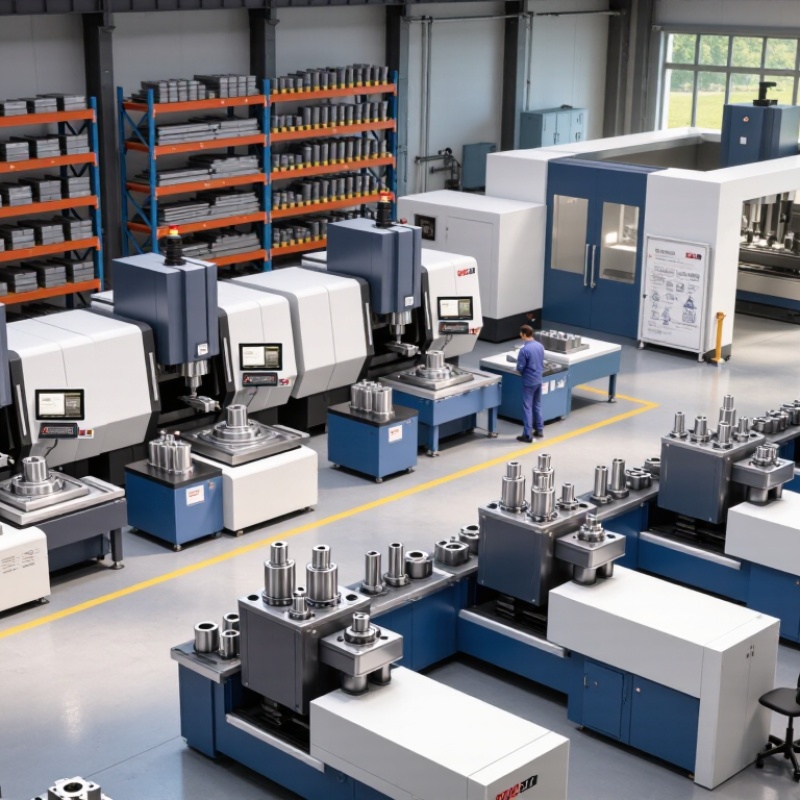
China’s mould industry remains one of the world’s largest manufacturing ecosystems. Recent industry estimates place its annual mould market value in the tens of billions of US dollars. The exact figure varies because statistical agencies classify moulds, dies, and tooling differently. That weakness matters when comparing reports.
Production is concentrated around automotive, electronics, household appliances, medical equipment, and packaging. Factories produce precision injection moulds, die-casting tools, stamping dies, and large structural moulds. Output is supported by dense supplier networks, skilled technicians, CNC machining, heat treatment, and inspection services. In practical terms, a complex automotive mould may pass through several workshops before final testing. Small errors can appear during trial shots.
Export data shows strong international demand. China ships moulds and related tooling to Asia, Europe, North America, and emerging manufacturing markets. Customs records commonly separate plastic moulds from metal-forming dies, making direct comparisons difficult. Export value also changes with steel prices, exchange rates, and project complexity. A high-value mould does not always mean higher output volume. Some reports overlook this distinction. Buyers should verify figures through customs databases, industry associations, and audited company records. Supplier rankings can also change quickly, especially when delivery reliability, tolerance control, and after-sales engineering are measured alongside revenue.
China Top 10 Mould Components Suppliers?
A credible ranking should measure more than reported revenue. Revenue shows market reach, but audited figures from annual reports and China’s National Bureau of Statistics need careful comparison. Capacity should include CNC equipment, heat-treatment lines, inspection rooms, and monthly output. A large factory is not always a fast factory.
Patent strength can be checked through CNIPA and WIPO databases. WIPO reported more than 1.6 million patent applications from China in 2023, yet application volume alone proves little. The ranking should count granted, relevant patents, citation quality, and active status. Certifications also require verification. ISO 9001 supports quality systems, while IATF 16949 matters for automotive tooling. Certificates must match the production site, not only the headquarters.
Lead time deserves serious weight. Use documented quotations, production schedules, and shipment records from at least twelve months. A supplier promising ten days may exclude design approval, steel preparation, polishing, and rework. That detail changes the ranking. A practical model could assign 25% to revenue, 25% to capacity, 20% to patents, 15% to certifications, and 15% to lead times. The weighting is imperfect. It should be reviewed annually, because exchange rates, machine investment, and export demand can distort comparisons. Procurement teams should also request sample inspection reports, tolerance data, and corrective-action records before accepting any Top 10 position.
China’s top 10 mould components suppliers in 2024 should be assessed through measurable industry performance, not advertising claims. A practical ranking can examine machining accuracy, delivery reliability, export experience, product range, and quality-control systems. It should also consider annual production capacity, custom-design support, and response times for engineering changes.
Precision matters. A supplier producing ejector pins, guide pillars, sliders, and cooling components must hold stable tolerances across repeated orders. Buyers can inspect inspection reports, material certificates, sample parts, and packaging details. A clean production floor and traceable batch records often reveal more than a polished website. Suppliers with automated grinding equipment may offer better consistency, while experienced technicians remain essential for complex mould assemblies.
The 2024 comparison should also measure defect rates, on-time delivery, technical communication, and after-sales handling. However, some figures are self-reported. That weakens direct comparison. Currency changes, order size, and regional labor costs can also distort supplier rankings. A smaller factory may deliver excellent trial batches but lack backup capacity during peak demand. This is where the ranking needs careful review. Real purchasing decisions should include factory audits, sample approval, and a small initial order before long-term cooperation.
Category-based 2024 benchmark of commonly supplied mould components in China; company names, brands, revenue and market-share data are intentionally excluded.
| Rank | Mould Component Category | Typical Materials Used in China | Typical Hardness or Finish | Key 2024 Procurement Metric | Common Quality Requirement | Relevant Standard or Reference |
|---|---|---|---|---|---|---|
| 1 | Guide Pillars and Guide Bushes | SUJ2 / GCr15 bearing steel, SKD61, hardened tool steel | Approximately 58–62 HRC; precision-ground working surfaces | High repeat demand across injection, die-casting and stamping moulds | Concentricity, straightness, surface roughness and matched clearance | ISO 286-2 fits; ISO 1101 geometric tolerancing |
| 2 | Ejector Pins | SKD61 / H13, SKH51 / M2 high-speed steel | Usually 50–62 HRC depending on grade and application | High-volume replacement and spare-parts requirement | Diameter consistency, tip geometry, straightness and wear resistance | DIN 1530 and comparable ejector-pin catalog specifications |
| 3 | Ejector Sleeves | SKD61 / H13, alloy tool steel | Approximately 48–60 HRC with precision internal grinding | Demand linked to complex cores, ribs and thin-wall moulded parts | Internal diameter accuracy, wall thickness uniformity and alignment | DIN 16756 and supplier-specific precision-component specifications |
| 4 | Return Pins and Ejector Retainers | H13 / SKD61, S50C, 40Cr and pre-hardened alloy steel | Typically 35–52 HRC, depending on load and heat treatment | Essential for automated cycling and reliable ejector reset | Axial straightness, shoulder accuracy and fatigue resistance | ISO 9001 quality systems and mould-component drawing tolerances |
| 5 | Slides, Lifters and Wear Plates | SKD61 / H13, SKD11 / D2, 40Cr and bronze wear alloys | Approximately 44–58 HRC on wear surfaces; polished or nitrided options | Growing requirement for undercuts, complex geometries and compact tooling | Sliding clearance, wear resistance, surface treatment and repeatability | ISO 1101; heat-treatment and nitriding records where specified |
| 6 | Mould Locks and Interlocks | SKD11 / D2, SKD61 / H13, 40Cr and hardened alloy steel | Usually 50–60 HRC on contact surfaces | Important for high-precision alignment and reduced parting-line mismatch | Contact-area accuracy, parallelism, wear pattern and repeat positioning | ISO 2768 for general tolerances; ISO 1101 for geometric control |
| 7 | Mould Springs and Gas Springs | Oil-tempered spring steel, chromium-silicon steel and nitrogen-charged systems | Load and fatigue performance specified by spring type and operating cycle | Selected by working load, stroke, cycle life and installation space | Load consistency, fatigue life, corrosion protection and safety factor | ISO 10243 for die springs; ISO 16030 for pneumatic connections where applicable |
| 8 | Hot Runner Components | H13 / SKD61, stainless steel, copper alloys and nickel-based heater materials | Thermal stability depends on steel grade, heater design and operating temperature | Demand driven by material savings, cycle control and multi-cavity production | Temperature uniformity, leak prevention, electrical insulation and nozzle fit | IEC 60204-1 for machine electrical safety; manufacturer process specifications |
| 9 | Cooling Plugs, Baffles and Water Fittings | Stainless steel, brass, copper alloys and engineering polymers | Corrosion-resistant surfaces; sealing performance is application dependent | Specified by flow rate, pressure, temperature and available cooling space | Leak testing, thread accuracy, flow consistency and corrosion resistance | ISO 228-1 pipe threads; ISO 1179 hydraulic and pneumatic connections where applicable |
| 10 | Date Inserts, Cavity Inserts and Identification Components | SKD11 / D2, SKD61 / H13, stainless steel and hardened tool steel | Approximately 45–60 HRC; laser marking or precision engraving commonly used | Demand linked to traceability, regulatory marking and replaceable cavity details | Legibility, fit, interchangeability, corrosion resistance and dimensional stability | ISO 9001 traceability practices; ISO 2768 and drawing-specific tolerances |
Note: Hardness values, material choices and tolerances are common industry ranges for mould components rather than claims about any individual supplier. Final specifications should be confirmed against the approved engineering drawing and applicable material certificate.
China Top 10 Mould Components Suppliers?
Selecting China’s top mould component suppliers requires more than comparing prices. Reliable manufacturers should provide accurate ejector pins, smooth guide systems, durable inserts, and stable hot runner parts. Ejector pins need consistent hardness and polished surfaces. Small scratches can leave marks on molded products. Guide pillars and bushings must maintain alignment under repeated pressure. This is where machining tolerance matters.
Experienced buyers should inspect material certificates, dimensional reports, and sample parts before placing large orders. Inserts often require excellent wear resistance, especially in glass-filled plastic applications. Hot runner parts demand careful thermal control, because uneven heating may cause leakage or color variation. I have found that detailed drawings prevent many disputes, although drawings are sometimes incomplete. That weakness deserves attention. Ask suppliers to confirm steel grades, heat treatment, coating options, and replacement availability.
Tips: Request a trial set. Measure pin diameter, surface finish, and fit with your existing mould base. Check whether the supplier can support custom sizes and emergency replacements. A clear inspection plan is useful. Keep communication written. It reduces confusion. Also, compare actual production samples instead of trusting catalog photographs alone. A supplier may look highly professional online, yet its delivery consistency still needs verification.
This chart presents representative hardness ranges commonly specified for hardened steel mould components. Actual values vary by steel grade, heat treatment, surface coating, operating temperature, and application requirements; the chart does not rank individual companies or brands.
Selecting China’s top 10 mould component suppliers requires more than comparing prices or catalog size. Quality benchmarks reveal how consistently a supplier controls steel, heat treatment, machining, and inspection. The ISO Survey 2022 recorded 1,265,216 valid ISO 9001 certificates across 189 countries and economies. This scale shows the standard’s global relevance, but certification alone is not proof of perfect parts. Buyers should request recent audit findings, process records, and corrective-action evidence.
DIN, HASCO, and JIS references help engineers compare component geometry, materials, and interchangeability. However, suppliers may interpret drawings differently. Dimensional tolerances must remain explicit. For precision mould components, inspection plans should identify critical diameters, flatness, concentricity, and surface roughness. DIN 16742 supports practical tolerance selection for moulded-part production, while JIS B 0405 provides general tolerance principles for machined dimensions. Use calibrated CMM equipment for critical features. Record actual values, not only pass-or-fail results.
Small errors become expensive. A 0.01 mm mismatch can affect sliding fit, venting, or mould life. Experienced buyers should compare first-article reports with batch inspection data. Ask whether measurements reflect room temperature and controlled instruments. That detail matters. I would also challenge suppliers that advertise “zero defects” without showing sampling methods. Perfect language can hide weak evidence. Standards create a baseline; disciplined measurement proves daily performance.
