2026 Best Industrial Machines for Global Buyers
Choosing the right Industrial Machine in 2026 is less about buying the biggest or fastest model. It is about matching equipment to the work, the factory, and the people who will maintain it. Global buyers compare CNC machines, industrial robots, packaging lines, compressors, and material-handling systems. Each choice affects output, product quality, energy use, and downtime. A machine that shines in a showroom may struggle beside a dusty production line.
The International Federation of Robotics reported 541,302 industrial robot installations worldwide in 2023, with 4.28 million robots operating in factories. These figures, published in World Robotics 2024, describe robots—not the entire industrial machinery market—but they show how quickly automation is becoming part of production. Taiichi Ohno, the industrial engineer associated with the Toyota Production System, offered a useful principle: “Where there is no standard, there can be no kaizen.” Buyers should therefore check whether a machine supports consistent processes, clear performance measurement, and practical improvement.
This guide compares leading machine categories and the factors that matter beyond the purchase price: usable capacity, accuracy, energy consumption, controls, spare-parts access, and service response. Ask for cycle-time evidence, not just a brochure claim. Check that replacement parts can reach your site reliably. Then assess operator training and maintenance requirements. These details can change the economics. No choice is universal. Even a well-sourced shortlist has limits; supplier claims still need verification against your own production conditions.
How Industrial Machines Are Classified in 2026
How Industrial Machines Are Classified in 2026
Industrial machines are best classified by what they do, how they work, and where they fit on a production line. Process equipment transforms materials: presses shape metal, while mixers combine ingredients. Material-handling machines move goods, from conveyors to automated guided vehicles. Inspection systems measure dimensions or detect surface flaws. Utility equipment, such as compressors and industrial chillers, supports production without directly making the product.
A second useful distinction is the level of automation: manually operated, semi-automated, or integrated into a connected production system. The International Federation of Robotics reported 4,281,585 industrial robots operating in factories worldwide at the end of 2023, in World Robotics 2024. That figure shows why buyers should assess robot compatibility alongside a machine’s core task. Check its payload, working range, cycle time, and connection requirements against the actual line—not just a catalogue description.
The categories overlap. A CNC machining cell can be both processing equipment and part of an automated system. That is useful, but messy. Buyers may also group machines by scale, portability, or energy demand, depending on site constraints. Classification is a starting point, not a substitute for checking real operating conditions. A machine’s label may not reveal the floor space, operator training, or maintenance access it needs.
Major Machine Categories for Global Buyers
2026 Best Industrial Machines for Global Buyers
Major Machine Categories for Global Buyers
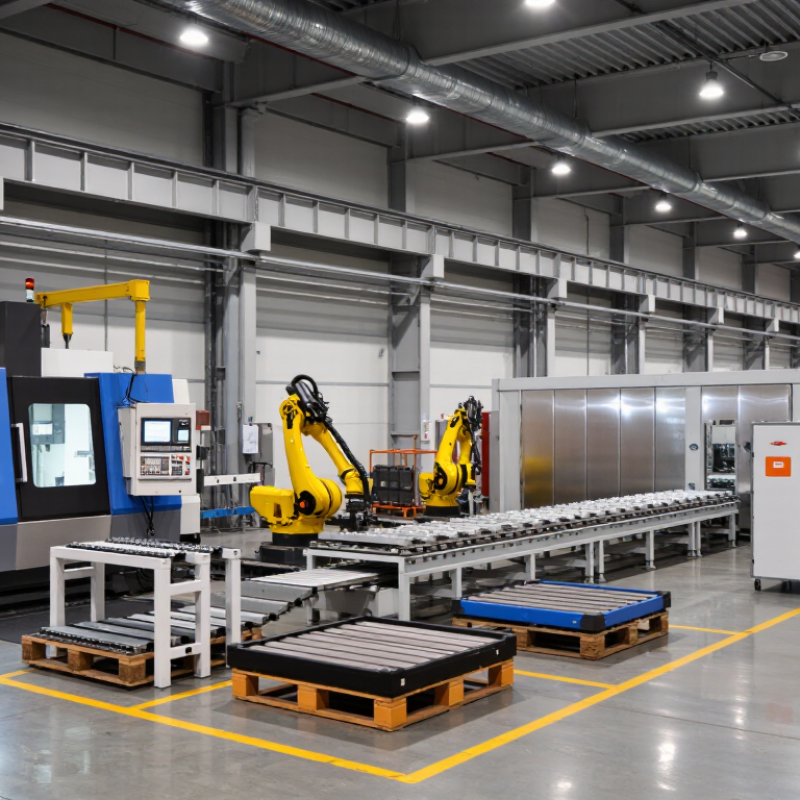
Global buyers commonly compare CNC machining centers, lathes, presses, industrial robots, packaging lines, and material-handling systems. CNC machines cut metal into precise parts; a five-axis unit can shape complex housings with fewer setups. Robots handle repetitive welding, loading, and palletizing tasks. IFR’s World Robotics 2024 report records 541,302 industrial robots installed worldwide in 2023, with 4.28 million operating.
Other essential categories include pumps, compressors, heat-treatment equipment, and inspection systems. Their value often depends on how well they fit the production line, not just rated capacity. The WTO’s World Trade Statistical Review 2023 reports that manufactured goods represented 63% of global merchandise exports in 2022. That trade context makes export-ready documentation and dependable spare-parts access practical purchasing considerations.
Check operating details before comparing headline specifications. A compressor rated for a large factory may waste energy in a small workshop. Confirm local voltage, floor loading, cycle time, safety guarding, and service requirements. Ask for acceptance-test records and a clear list of wear parts. Fit matters more. Published figures rarely show every installation constraint; even a capable machine can disappoint when operator training or maintenance planning is thin.
2026 Best Industrial Machines for Global Buyers
Major Machine Categories for Global Buyers — Example Rated Motor Power
The chart compares example motor ratings found in common industrial equipment configurations. Actual power requirements vary by machine size, application, and specification; use the equipment nameplate and supplier documentation when comparing options.
Key Performance, Safety, and Compliance Factors
For global buyers, machine performance should be measured against the production task, not a headline speed. Check rated output, repeatability, changeover time, and performance under sustained load. A machine that meets its advertised cycle rate in a short test may behave differently across an eight-hour shift. Ask suppliers to document test conditions, acceptance criteria, maintenance intervals, and expected energy use. Small details matter. Confirm spare-part lead times, operator training, and access to technical support near the installation site. It is tempting to choose the highest capacity, but oversized equipment can increase energy use and complicate daily operation.
Safety features must suit the real workflow. Inspect guards, emergency stops, interlocks, noise levels, and clear access for cleaning or maintenance. Safety is practical, too. Ask how hazards are controlled during setup and servicing, and ensure manuals are available in languages operators understand. For compliance, identify requirements for the destination market, installation site, and machine category. A document accepted in one country may not satisfy another buyer’s requirements. Request electrical diagrams, risk assessments, declarations, and test records, then have qualified local personnel review them. Specifications can look complete on paper; sometimes the installation plan reveals what is missing.
Matching Machines to Industries and Production Needs
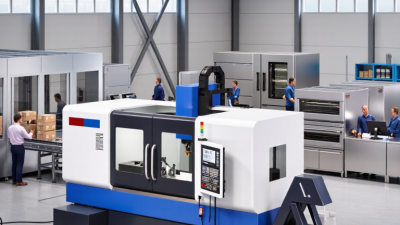
The right industrial machine depends on the product, process, and daily workload—not just its advertised output. A small food workshop may need stainless-steel surfaces and equipment that is easy to wash down. A metalworking shop may care more about cutting accuracy, fixture changes, and consistent cycle times. Define material sizes, acceptable tolerances, and expected shifts before comparing machine capacity. Measure the available floor space, too.
Production needs can change what “best” means. A packaging line with frequent product changes benefits from quick adjustments and clear controls. A factory making one part in high volume may prioritize repeatability and dependable uptime. Ask how the machine handles peak loads, routine cleaning, and planned maintenance. Small details count. A machine that fits the output target but blocks a service aisle can create daily problems.
Global buyers should check installation requirements, electrical specifications, operator training, spare-part availability, and service response times. Request technical documents and a clear acceptance-test plan before purchase. Compare total operating needs, including energy use, tooling, and maintenance—not only the purchase price. Even careful estimates miss something. Revisit assumptions with the people who will run and maintain the equipment; their practical feedback can reveal a mismatch before installation.
Global Sourcing, Installation, and Lifecycle Support
For global buyers, an industrial machine is only as dependable as the support behind it. A low purchase price can lose its appeal when a control cabinet arrives with the wrong voltage, or a crate cannot pass through the factory’s loading bay. Confirm site dimensions, utilities, floor loading, and import documentation before shipment. Small checks prevent expensive delays.
Request a written installation plan with named responsibilities, commissioning tests, operator training, and acceptance criteria. Ask which spare parts are stocked regionally, how quickly technicians can respond, and whether manuals match the delivered machine’s configuration. McKinsey’s 2017 analysis of predictive maintenance estimated potential downtime reductions of 30–50% and maintenance-cost reductions of 10–40%. These are potential gains, not guarantees; results depend on equipment, data quality, and maintenance practices.
Lifecycle support should be assessed before the purchase order, not after a fault stops production. Compare service coverage, software updates, diagnostic access, and parts availability over the machine’s expected working life. Keep a practical record of commissioning readings, lubrication intervals, and recurring alarms. It helps later. Buyers sometimes overvalue a polished demonstration and undervalue a clear escalation path. That deserves a second look. McKinsey’s figures come from its 2017 report, “Smartening up with artificial intelligence,” and should be treated as benchmarks rather than promised outcomes.