What Is a Production Machine and How Does It Work?

A Production Machine is more than a large metal structure on a factory floor. It is a coordinated system that transforms materials into consistent products. Motors provide movement. Sensors monitor position, temperature, pressure, and speed. Controllers then adjust each operation within carefully defined limits.

Manufacturing quality expert W. Edwards Deming said, “Quality comes not from inspection, but from the improvement of the production process.” This idea explains why modern Production Machine design focuses on prevention, not only final checking. A machine may cut steel, fill containers, assemble electronics, or package food. Its value depends on repeatable performance, safe operation, and practical maintenance.

The process begins with a work instruction or digital program. Materials enter the machine. Grippers, conveyors, tools, and actuators move them through each stage. Sensors send feedback to the control system. If a measurement changes, the system may slow production or stop the line.

The details matter.

A loose belt can create uneven products. A dirty sensor can produce false readings. Poor calibration can quietly increase waste. These problems are easy to underestimate. Even advanced equipment needs trained operators, scheduled maintenance, and honest performance records.

This article explains what a Production Machine is, how its main systems work, and why automation does not remove human responsibility. It also examines common machine types, control methods, safety features, and efficiency measures. Some factories achieve impressive output. Others discover that speed alone hides expensive weaknesses. Understanding both outcomes gives readers a more realistic view of production technology.
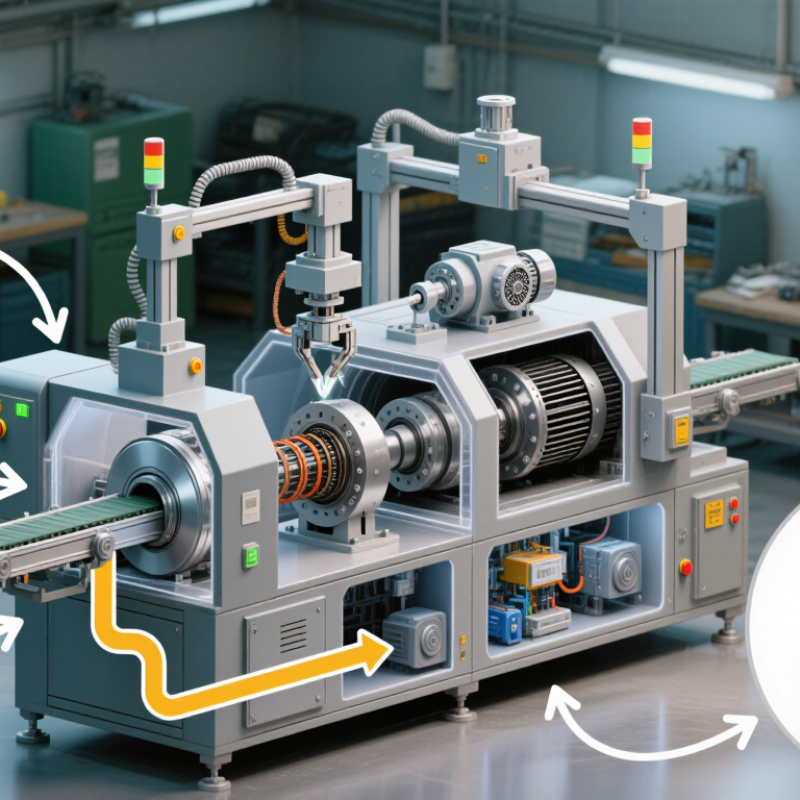
What Is a Production Machine and How Does It Work?

Definition and Core Purpose of a Production Machine

A production machine is equipment designed to perform a repeatable manufacturing task. Its core purpose is to convert materials into consistent products with controlled effort, timing, and quality. Unlike a general hand tool, it follows a defined process. It may cut, form, fill, join, or inspect components. In a workshop, an operator loads raw material, selects approved settings, and starts the cycle. Sensors monitor position, pressure, temperature, or speed. A controller coordinates each movement. The machine then produces the intended output with less variation.

Speed alone is not enough. Quality matters. Safety matters too. Maintenance access can determine whether the equipment remains useful over time. A machine may run continuously while producing hidden defects. This view is easy to overlook. In practical production work, small alignment errors can affect hundreds of parts. A worn guide may sound normal but still reduce accuracy. Regular setup checks, documented adjustments, and clear inspection points improve reliability. However, no system is perfect. Human judgment remains important when conditions change or results look unusual.

Tips: Define the required task before selecting equipment. Check cycle time, tolerances, cleaning needs, access, and emergency controls. Test sample parts under realistic conditions. Keep operating instructions visible. Review rejected parts, not only output numbers.

Main Components and Their Individual Functions

What Is a Production Machine and How Does It Work?

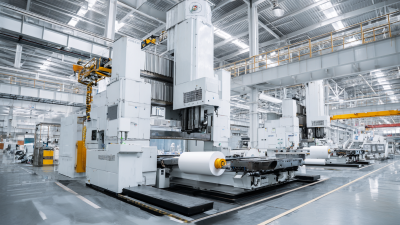
A production machine is equipment designed to perform repeatable manufacturing tasks. It may cut, form, fill, assemble, inspect, or move materials. Its frame provides stability while the drive system supplies controlled motion. Motors, gearboxes, belts, or hydraulic parts transfer power to the working mechanism. Without a rigid frame, small vibrations can reduce accuracy and shorten tool life.

The controller acts as the machine’s operating brain. It receives programmed instructions and coordinates speed, position, timing, and sequence. An operator uses the control panel to adjust settings and monitor alarms. Sensors check details such as temperature, pressure, position, and material presence. These signals help the controller correct movement or stop the process. Sensors can fail, though. Dust, heat, or poor alignment may create misleading readings.

The tooling performs the physical operation. A cutting head removes material, a forming tool changes its shape, and a gripper moves components between stations. Safety guards, emergency stops, and interlocks protect people near moving parts. Lubrication systems reduce friction, while cooling systems manage heat during demanding cycles. In real workshops, maintenance records reveal problems before failure becomes obvious. A loose connector may cause more trouble than a major component. Operators should inspect wear points, unusual sounds, and inconsistent output during each shift. Machines are precise, but they are not self-correcting.

How Materials Move Through the Production Process

A production machine converts raw material into a usable part through controlled, repeatable steps. Its work may include feeding, cutting, forming, joining, inspecting, and releasing products. Materials usually enter through a hopper, tray, reel, or pallet. Conveyors, grippers, rollers, and guided channels then move them between stations. The machine’s control system coordinates speed, position, pressure, and timing.

Material flow depends on more than movement. Each station must receive the correct quantity at the correct moment. A small delay at the feeder can leave a cutting tool idle. A poor handoff can create scratches, jams, or hidden defects. The International Federation of Robotics reported 541,302 industrial robots were installed worldwide in 2023. This growth reflects the need for precise, repeatable handling across production lines.

Sensors check presence, weight, temperature, distance, and alignment. A vision system may reject a crooked component before assembly. Operators still monitor noise, vibration, dust, and unusual material behavior. According to the International Energy Agency, industry represented about 37% of global final energy use in 2022, so unnecessary movement also carries an energy cost. In practice, a clean flowchart can mislead. Materials bend, stick, cool, and vary. That is why experienced technicians adjust guides, inspect wear points, and question data that looks perfect. A smoother path is not always a better one. Sometimes, slower handling prevents expensive rework.

What Is a Production Machine and How Does It Work? - How Materials Move Through the Production Process
Typical production-process data varies according to the material, machine type, product design, and operating conditions.
Process Stage Main Machine or System Material Movement Typical Operating Data Primary Control Point
1. Receiving and Identification Receiving equipment, barcode or RFID reader, weighing scale Raw materials move from delivery storage to an identified receiving area. Weight recorded in kilograms; identity and lot information checked against the purchase or production order. Material identity, quantity, visible damage, and required documentation
2. Storage and Staging Racking, bins, silos, tanks, conveyors, or pallet-handling equipment Materials are held under defined conditions and released to production when needed. Common controls include temperature, humidity, stock level, and first-in-first-out rotation. Correct storage location and protection from contamination, moisture, or deterioration
3. Feeding and Metering Hopper, feeder, pump, dosing unit, roller, or automated transfer system The machine delivers material to the processing zone at a controlled rate. Feed rate may be measured in kilograms per hour, liters per minute, units per minute, or meters per minute. Stable feed rate, correct recipe or batch quantity, and prevention of blockages
4. Primary Processing Cutter, press, mixer, furnace, molding machine, mill, or forming machine The material is cut, shaped, mixed, heated, compressed, or otherwise transformed. Important variables include force, temperature, pressure, speed, time, and material feed rate. Process parameters must remain within the approved operating window.
5. Secondary Operations Drill, grinder, trimmer, coating unit, heat-treatment equipment, or assembly station Partially processed material moves between connected workstations or production cells. Cycle time is commonly tracked in seconds per part; setup time is tracked separately from production time. Dimensional accuracy, surface condition, alignment, and correct component fit
6. In-Process Inspection Sensors, gauges, vision systems, scales, or coordinate measuring equipment Samples or individual units are checked before continuing to the next operation. Measurements may include length, diameter, thickness, mass, temperature, pressure, or defect count. Inspection results determine whether material proceeds, is reworked, or is rejected.
7. Material Handling Between Operations Conveyor, lift, robot, transfer cart, crane, or guided vehicle Parts move in a defined sequence while minimizing manual lifting and unnecessary travel. Tracked factors include travel distance, transfer time, queue size, and work-in-process quantity. Correct routing, safe handling, traceability, and avoidance of bottlenecks
8. Final Inspection and Testing Test bench, inspection station, leak tester, electrical tester, or functional tester Completed products are tested against specified performance and safety requirements. Results are recorded as pass/fail, measured values, defect type, and inspection time. Conformance to product specifications and applicable safety requirements
9. Packaging and Finished-Goods Storage Packaging machine, labeling unit, sealer, palletizer, or storage system Finished goods are protected, labeled, grouped, and transferred to a dispatch area. Typical records include package count, gross weight, label information, and storage location. Correct product, quantity, packaging integrity, and traceability information
10. Performance Monitoring Machine controller, sensors, production software, and operator interface Data moves from sensors and operators to monitoring systems for analysis and corrective action. Common metrics include output rate, cycle time, downtime, scrap rate, yield, and overall equipment effectiveness. Early detection of deviations, downtime causes, quality losses, and maintenance needs
Production Machine:
Equipment that applies mechanical, thermal, chemical, electrical, or automated actions to transform materials into products.
Basic Flow:
Receive → Store → Feed → Process → Inspect → Transfer → Test → Package.
Key Objective:
Move materials safely and consistently while meeting the required output, quality, cost, and delivery targets.

How Control Systems Guide Machine Operations

A production machine turns materials into repeatable products through coordinated mechanical and electrical actions. Its control system acts like a careful conductor. Sensors measure temperature, pressure, speed, position, and vibration. A programmable controller compares these readings with stored target values. It then adjusts motors, valves, heaters, or robotic movements. The cycle repeats in milliseconds.

The International Federation of Robotics reported 541,302 industrial robots installed worldwide in 2023. Many of these systems depend on closed-loop control. For example, a position sensor can detect a misaligned component before a drill begins. The controller then pauses the sequence or corrects the movement. Human-machine interfaces display alarms, trends, and operating status. Safety circuits also stop motion when a guard opens or abnormal force appears.

Control systems do more than automate motion. They connect production data with maintenance decisions. Deloitte’s 2023 Smart Manufacturing survey found that 86% of surveyed leaders viewed smart manufacturing as a major competitiveness driver over the next five years. Yet automation is not automatically reliable. A clean dashboard can still hide a poorly calibrated sensor. The neat control loop is messier in practice. Operators need training, documented settings, and regular verification. Small errors can grow quietly. A thoughtful system leaves room for human judgment.

Common Types, Applications, and Maintenance Requirements

What Is a Production Machine and How Does It Work?

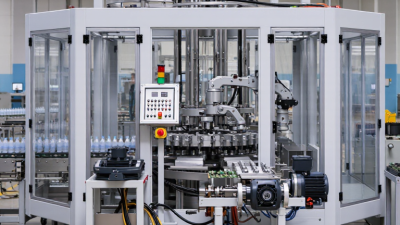
Production machines convert materials into consistent products through controlled mechanical, electrical, or digital operations. Common types include cutting machines, forming presses, filling equipment, packaging systems, and automated assembly cells. They are not interchangeable. A cutting unit may process metal sheets, while a filling machine handles measured liquids or powders. Each machine suits a specific production speed, material, and accuracy requirement.

In food processing, production machines portion ingredients, seal containers, and apply labels. In furniture manufacturing, saws, drills, and edge-banding machines prepare panels for assembly. Electronics facilities often use precision placement and inspection equipment. Sensors monitor position, temperature, pressure, and output quality. When readings move beyond set limits, the control system may stop the process or request operator attention.

Maintenance keeps these systems safe and predictable. Operators should inspect guards, belts, cables, fasteners, and emergency stops before each shift. Small errors spread. Lubrication must follow the service manual, because excess oil can attract dust and damage nearby parts. Technicians should record vibration, unusual noise, cycle time, and rejected units. These details often reveal wear before a breakdown occurs. Scheduled maintenance may include filter replacement, alignment checks, software verification, and sensor calibration. However, fixed schedules are not always enough. A dusty workshop or heavy workload can shorten component life, so maintenance intervals sometimes need adjustment after reviewing actual operating data. I have found that rushed inspections create false confidence; a clean exterior does not prove reliable internal performance.